What eCommerce Brands Need to Prepare for in the Lead-Up to Black Friday Cyber Monday 2026
12 August 2026 BFCM
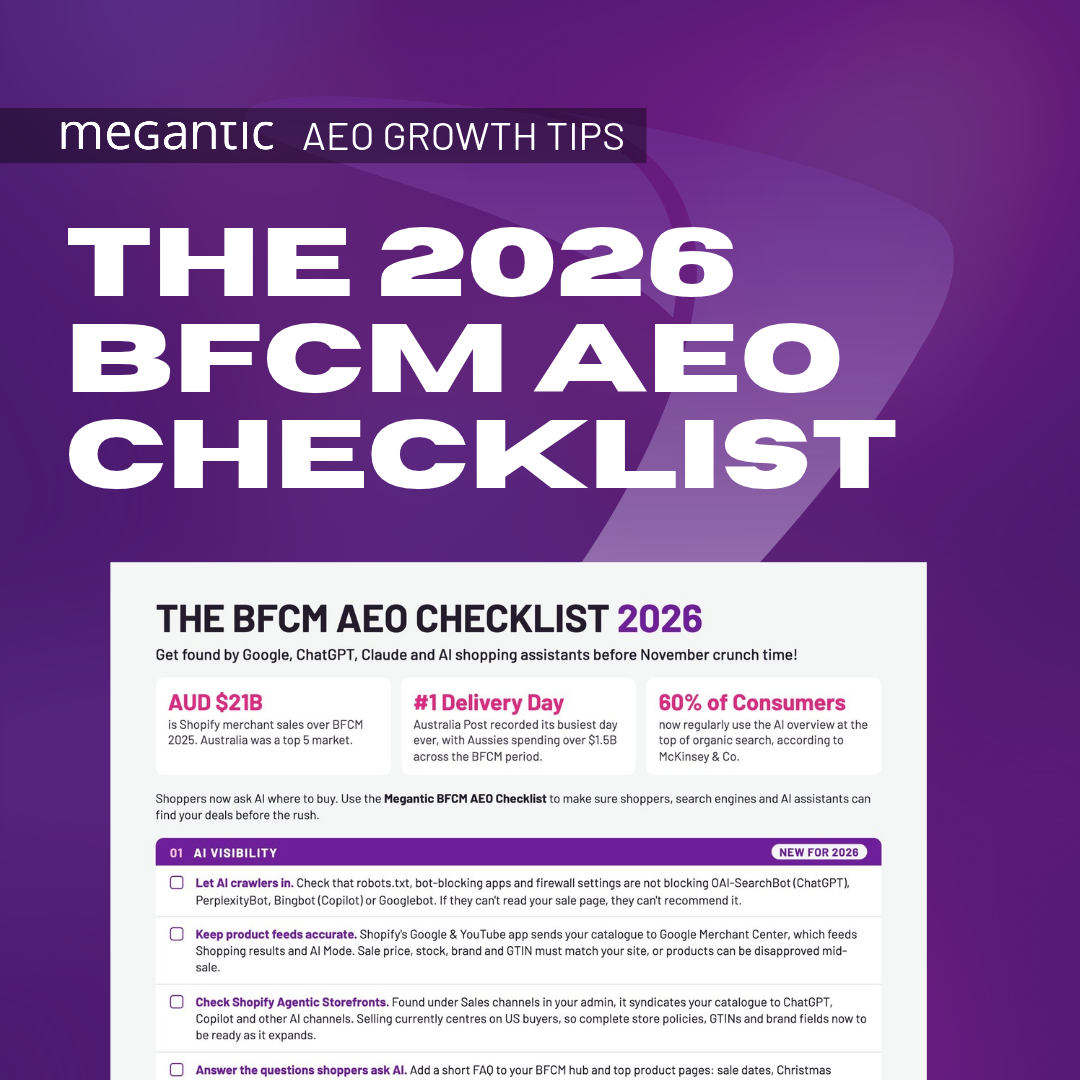
Black Friday falls on 27 November for the year, 2026. That’s right… the countdown to the most critical retail window of the year has officially begun. Your immediate priority as a retailer should be to ensure max online visibility before the peak hits.
Black Friday and Cyber Monday remain Australia’s peak online shopping season. And this year will certainly be different.
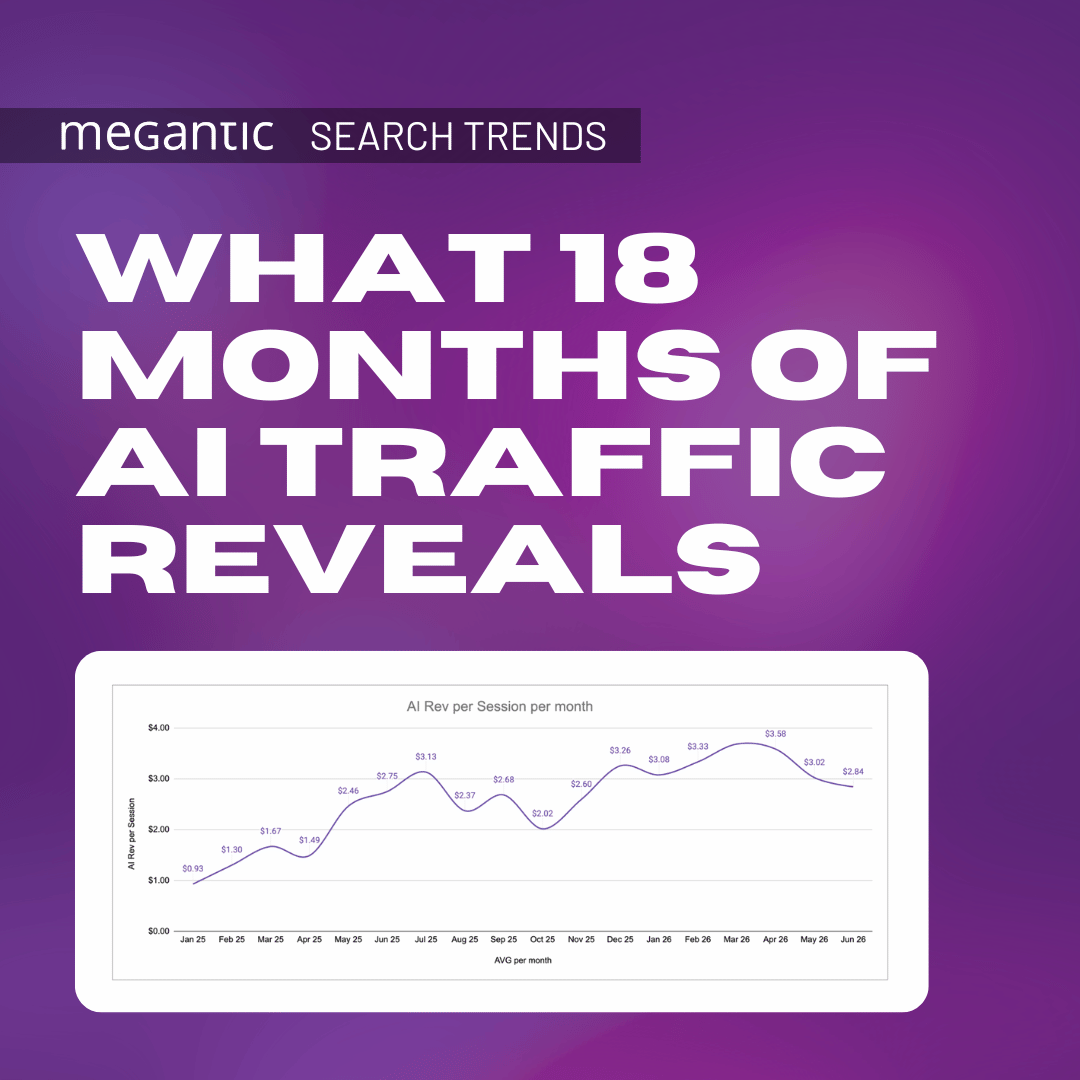
What we are seeing in the Australian market is a gradual shift in market share, with AI traffic increasing almost tenfold in just 18 months.
As AI agents increasingly research and shortlist products on a shopper’s behalf, preparing your technical foundations for this November deadline is no longer optional, but it could be the deciding factor in whether your brand makes the cut during the BFCM rush.
Where Australian shoppers are right now
The version of agentic commerce you see in the headlines is an AI that shops for you from start to finish. The Australian research suggests we are a little way off that, and the reality is more useful to plan around.
Adyen’s 2026 Australia Retail Report found that 64% of Australians have already used AI assistants to browse, compare or discover products, while a similar proportion said they were uncomfortable letting AI complete a purchase for them. Zip’s July 2026 research landed in much the same place. Around 92% of AI shoppers were comfortable with AI comparing options and making recommendations, and only 37% were comfortable with completing a purchase automatically. The biggest takeaway stat: of the Australians already using AI while shopping, 77% said it had some or a lot of influence over what they ended up choosing.
So while Australians are holding onto the checkout button for now, they are increasingly happy to let an AI build the shortlist. Which means your site does not need to support agentic checkout this November. What it does need is to be legible to a machine that is deciding whether you make that shortlist in the first place.
That is a much smaller technical task, and it happens to be work you can complete comfortably before peak.
Why this matters more during BFCM than the rest of the year
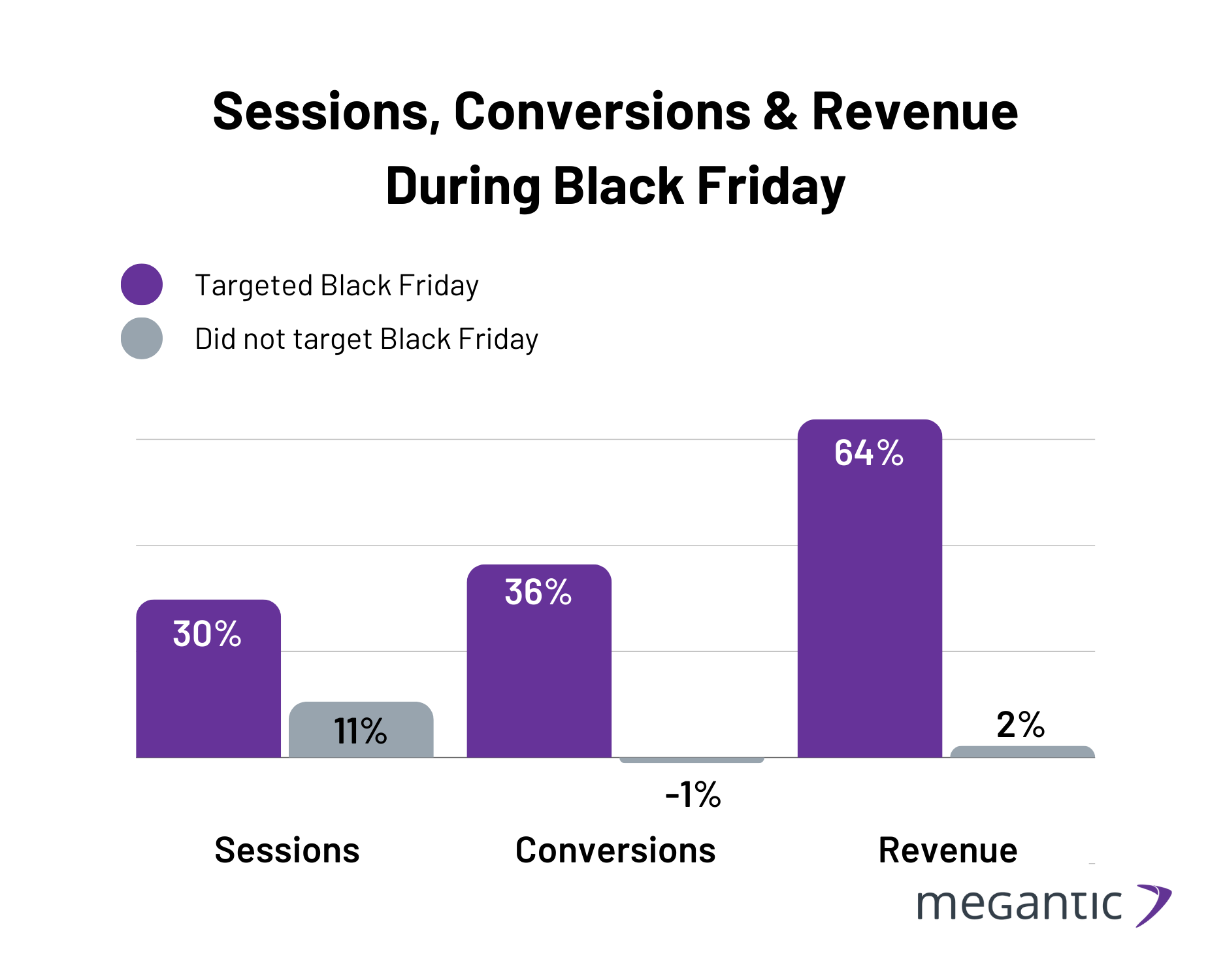
We looked at our Australian client base across the 07/11 to 07/12 window last year and split it in two: clients running a deliberate BFCM strategy, and clients who were not.
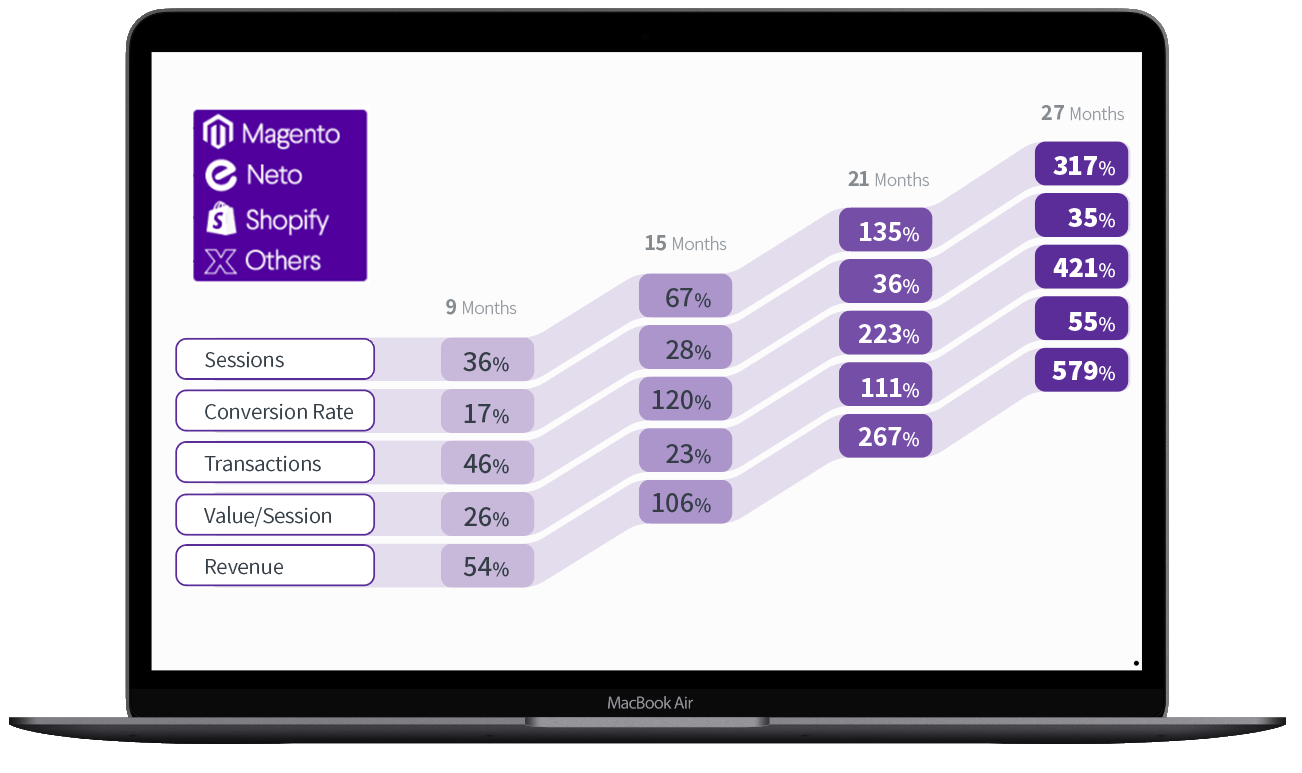
Clients with a strategy in place grew organic revenue by 97% month on month. Clients without grew by 48%. Conversion rate followed a similar shape, at 78% against 38%.
None of that gap came from AI. It came from preparing for a peak rather than arriving at one. Coops and Cages ran a two-week pre-launch phase focused on mobile testing and priority page optimisation, and came out of BFCM with conversion rate up 108% and revenue up 97% year on year. Matchbox got a theme rollout finished before November traffic arrived and posted a 48% lift in conversion rate.
Agentic readiness is the same principle applied one layer further down the stack. The work itself is fairly modest. It just needs to happen before the traffic shows up rather than during it.
Five quick wins you can do now for your brand
1. Check that your prices survive without JavaScript
This one tends to surprise people, so it is worth starting here.
As of mid 2026, none of the major AI crawlers execute JavaScript. That includes GPTBot, OAI-SearchBot, ClaudeBot, PerplexityBot and Bytespider. Google Gemini is the exception, because it rides on Googlebot’s rendering infrastructure. Everything else reads the raw HTML your server returns and works with whatever it finds there.
The test takes about ten seconds. Right-click a product page, select View Page Source, and look for your price, availability and product copy. If they are not in there, most AI surfaces are looking at an empty shell where your PDP should be. It is entirely possible to rank well on Google and be invisible everywhere else, which is why this one is easy to miss.
There is a BFCM wrinkle worth flagging too. If your Black Friday discount is applied at the cart rather than reflected in the marked-up price on the page, an agent comparing offers has no way of knowing you are on sale. The same goes for “extra 20% off at checkout” banners that render client-side. If the deal only appears after JavaScript runs, the deal effectively does not exist as far as the agent is concerned. We would recommend testing this on your top sellers well before you go live.
Rendering changes take time, so this is a good one to raise with your development team now.
2. Make sure you are not blocking the agents you want
AI vendors now run separate crawlers for model training and for search citation, under different user agents. That is genuinely helpful, because it means you can opt out of training while remaining eligible to be cited and recommended. A blanket block on AI bots does both at once, and quietly removes you from a channel that is growing quickly.
One recent crawl study found that 8.7% of AI bot requests were being met with 403 errors. Development teams often tighten bot rules ahead of peak traffic for perfectly sensible performance reasons, which makes this a live risk in November rather than a theoretical one. Worth pulling up your robots.txt and WAF rules now, and then checking them again in the week before launch.
3. Tidy up conflicting product information across the web
Agents don’t look at your product page in isolation. They compare it against your marketplace listings, your resellers, your feeds and whatever a review site wrote about you a few years ago.
When titles, specifications or prices differ between those sources, that inconsistency reads as uncertainty, and agents tend to route around uncertainty when they are making recommendations. Price is the clearest example! If your site says $89.95 and your feed says $94.95, an agent may simply deprioritise you rather than work out which one is correct.
Auditing your top 50 SKUs across every surface they appear on is a reasonable starting point. Same GTIN, same title, same attributes, same price. If you have unauthorised sellers undercutting you, this is now an AI visibility question as well as a margin one. It does take longer than most teams expect, so it is worth scoping early.
4. Publish an llms.txt, with realistic expectations
We want to be upfront about this one, because Google is currently giving two different answers depending on which team you ask.
Google Search’s guidance from June 2026 is clear that you do not need llms.txt or any other AI-specific file to appear in Google Search, including its generative features. Days before that guidance landed, Lighthouse 13.3 shipped a new Agentic Browsing category that checks for the file. Same company, two different product teams, two different positions.
Our view is that you should go ahead and publish one. It remains a proposed protocol rather than a standard, and Ahrefs found that 97% of published llms.txt files received no bot requests at all in May 2026. But it costs almost nothing to create, Chrome now checks for it, and there is no downside to a short and accurate file sitting at your root.
The one thing we would say is that a stale llms.txt is worse than none at all, since it points machines towards pages that may no longer exist. If you cannot commit to keeping it current, it is fine to skip it.
5. Keep your BFCM landing pages stable, and keep them permanently
There are two parts to this one.
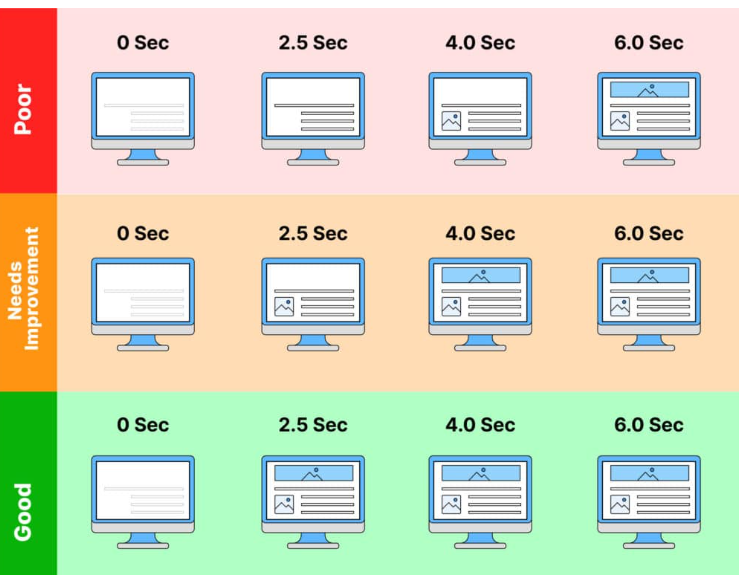
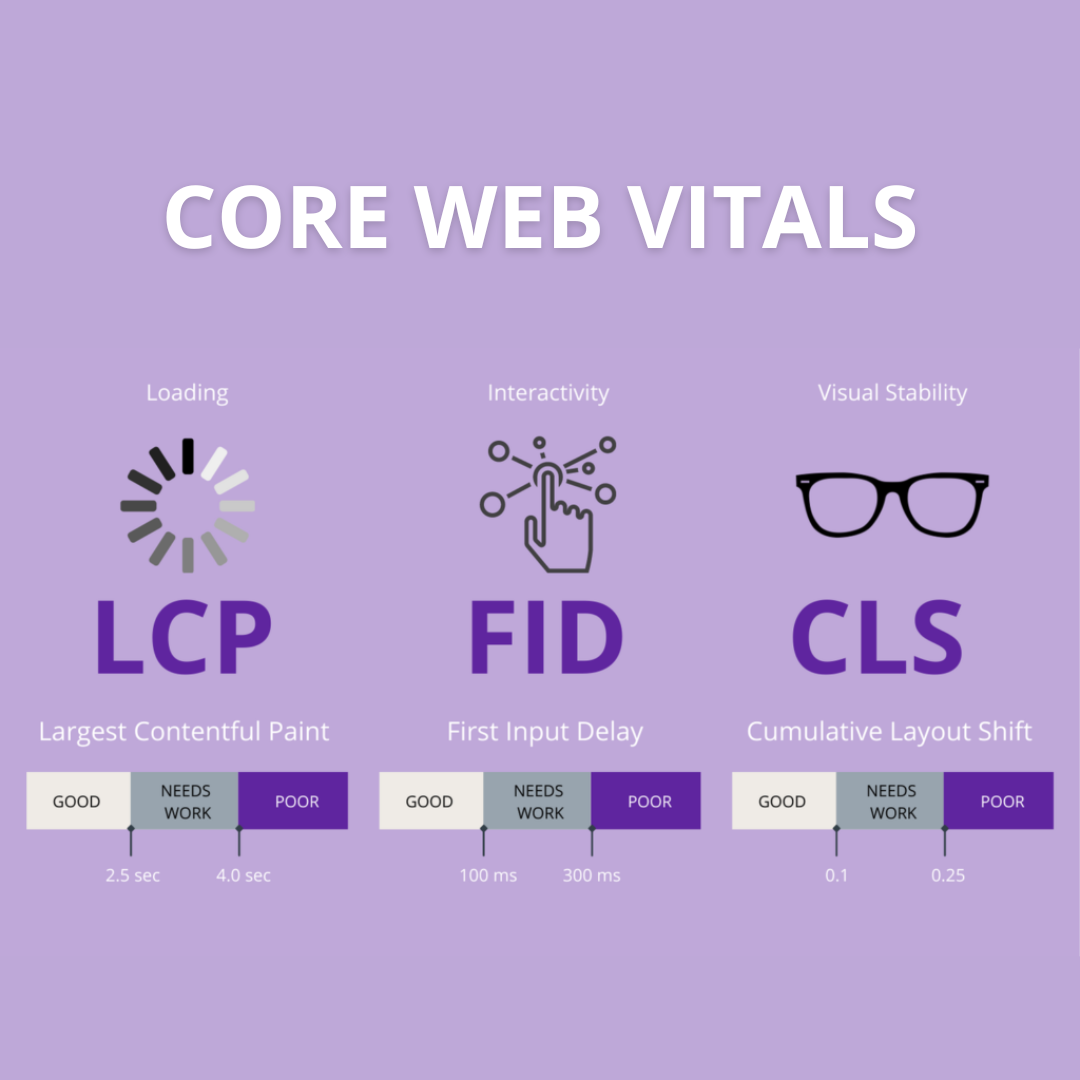
The first is stability. Layout shift has always been a human experience problem, and it is now an agent problem as well. If elements move between the moment an agent identifies them and the moment it tries to act on them, the interaction falls over. Collection pages and PDPs are where this tends to bite hardest during a sale, because countdown timers, promotional banners and injected blocks all arrive at once.
The second is permanence. We have kept BFCM collections live after the event for clients like Louenhide and Matchbox for years now, linked from blogs and other content so they never become orphaned. It has always been a sound SEO practice. It also happens to be sound entity practice, because a URL that has existed, been linked and been crawled across three consecutive Novembers carries far more weight than one created in October. Whatever you build this year, please do not delete it on 2 December.
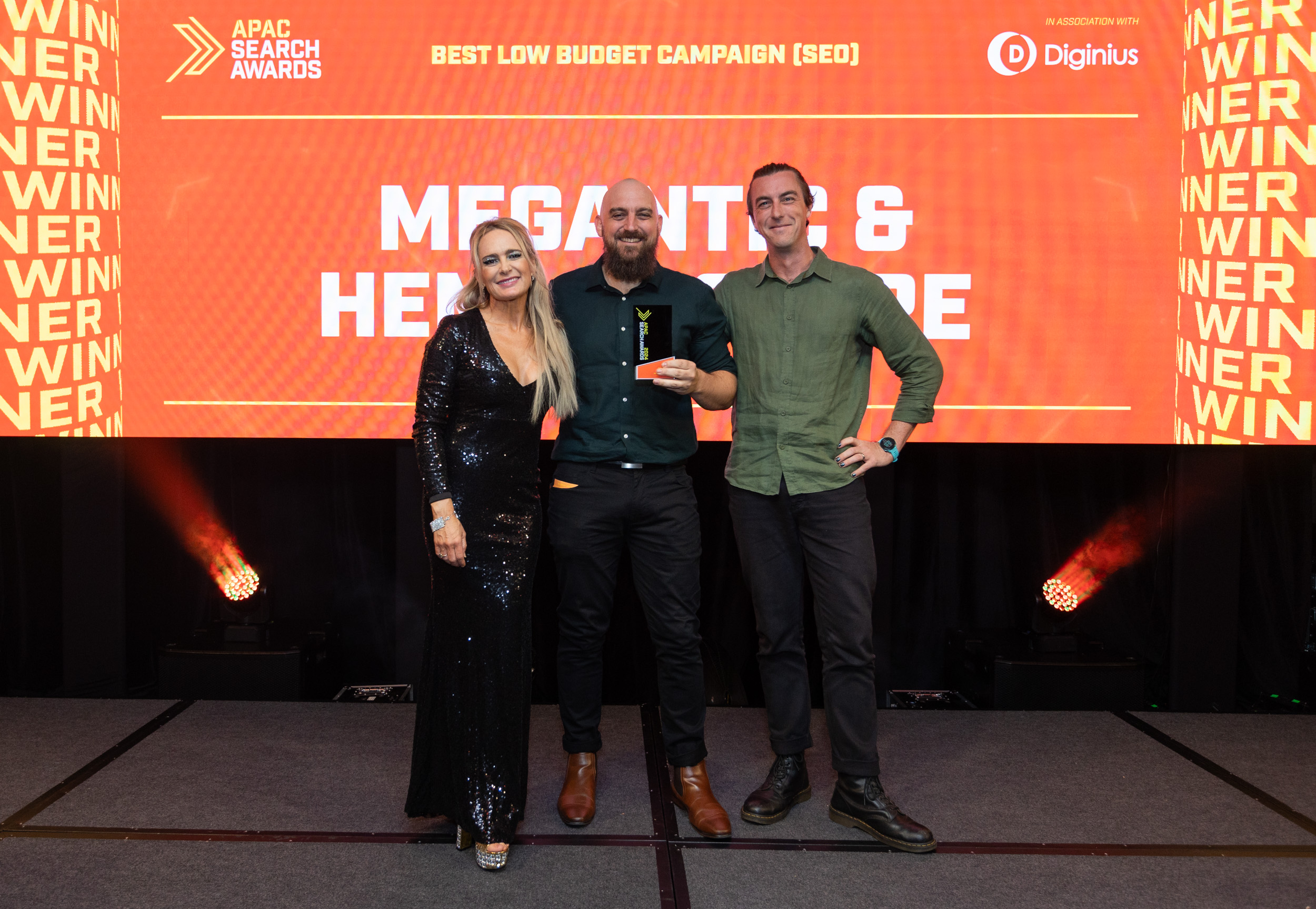
If you commit to the advice above, you’ll see a massive difference in growth over the BFCM. And to demonstrate, we have an example with Megantic Client, Louenhide.
Driving BFCM Sales Through Smarter SEO for Louenhide:
Background: Louenhide had seen big growth since partnering with Megantic in September 2021 for their Shopify migration. The next goal was to maximise growth during crucial sales periods, leveraging Australian insights and optimising their SEO strategy well in advance for Black Friday Cyber Monday.
Megantic delivered a strategic BFCM SEO strategy where we:
- Conducted keyword research around Black Friday–related terms to inform which collections to surface for both UX and search engines
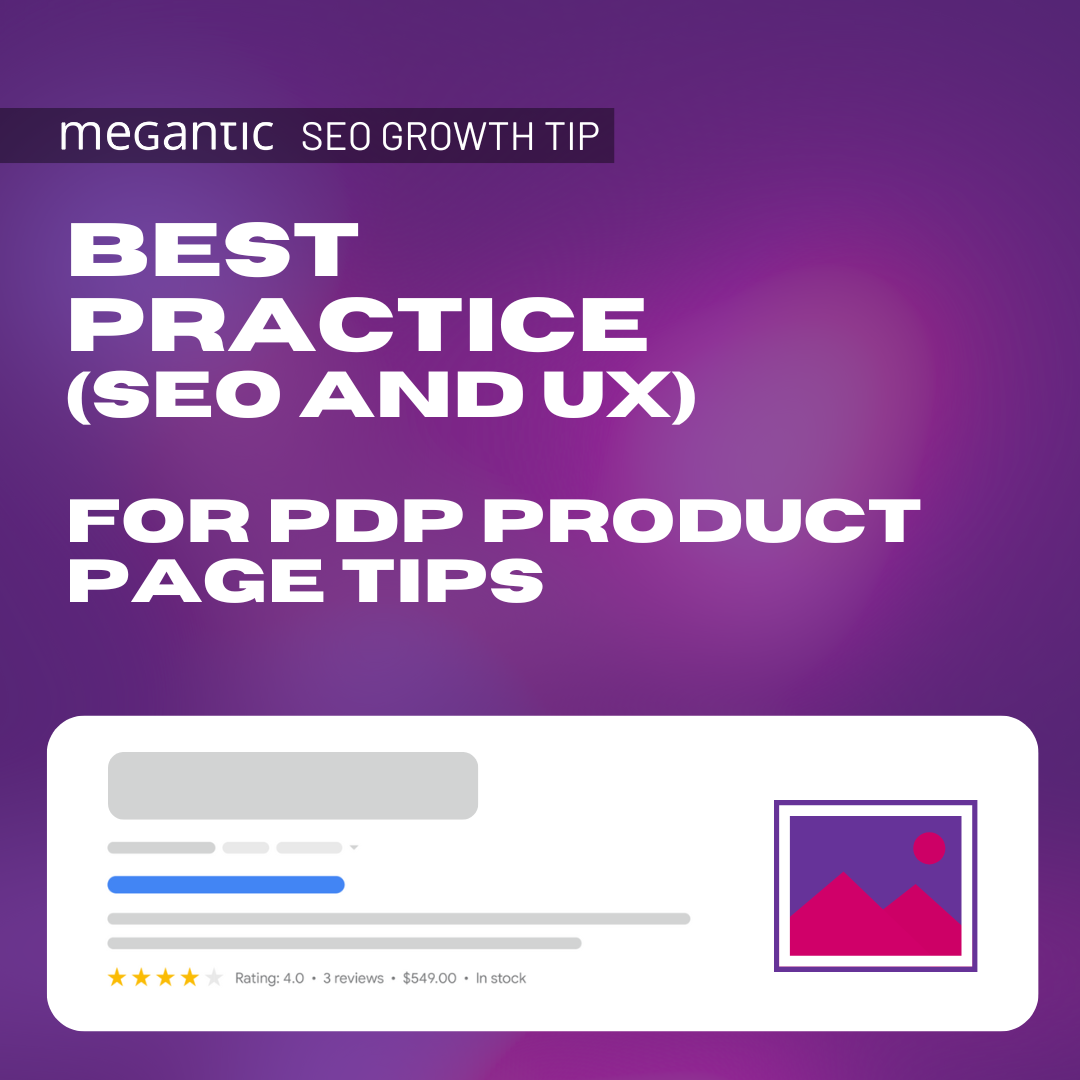
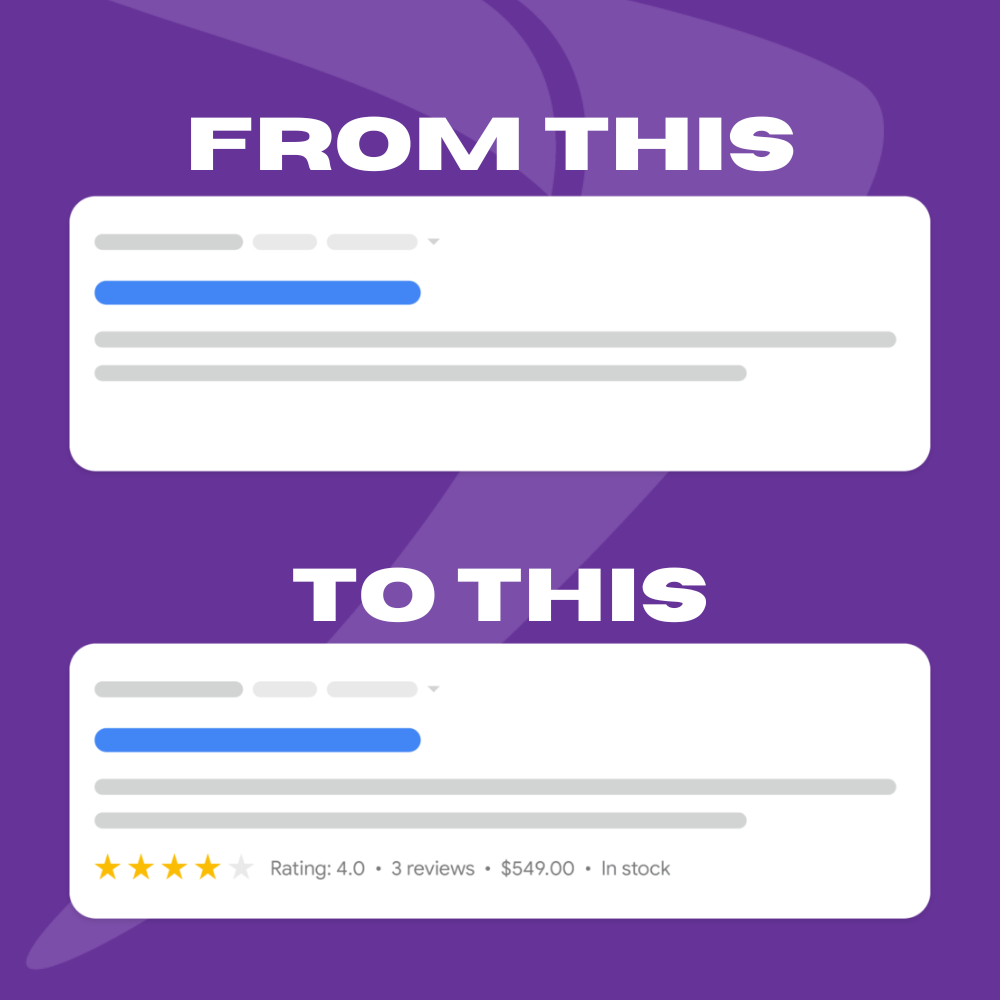
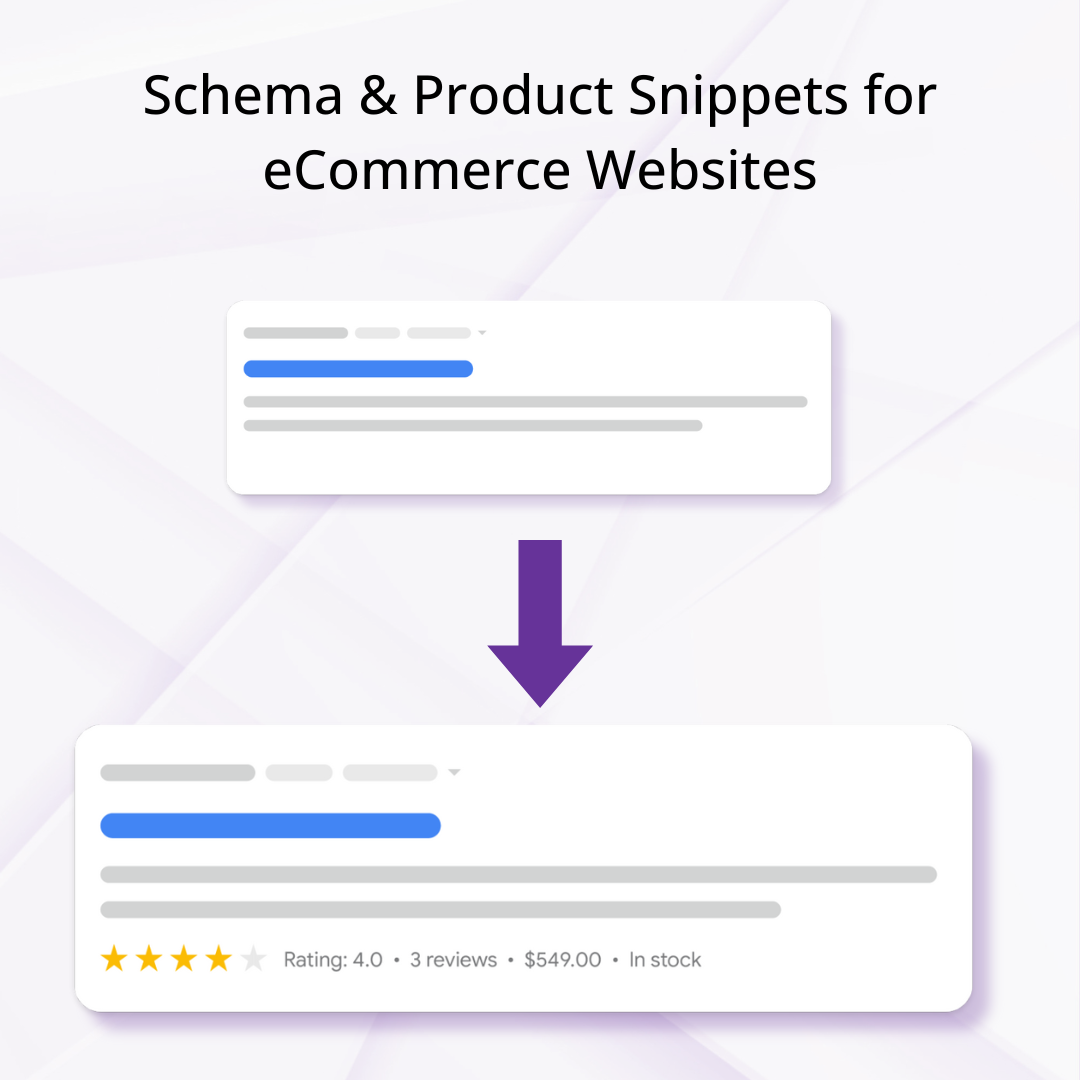
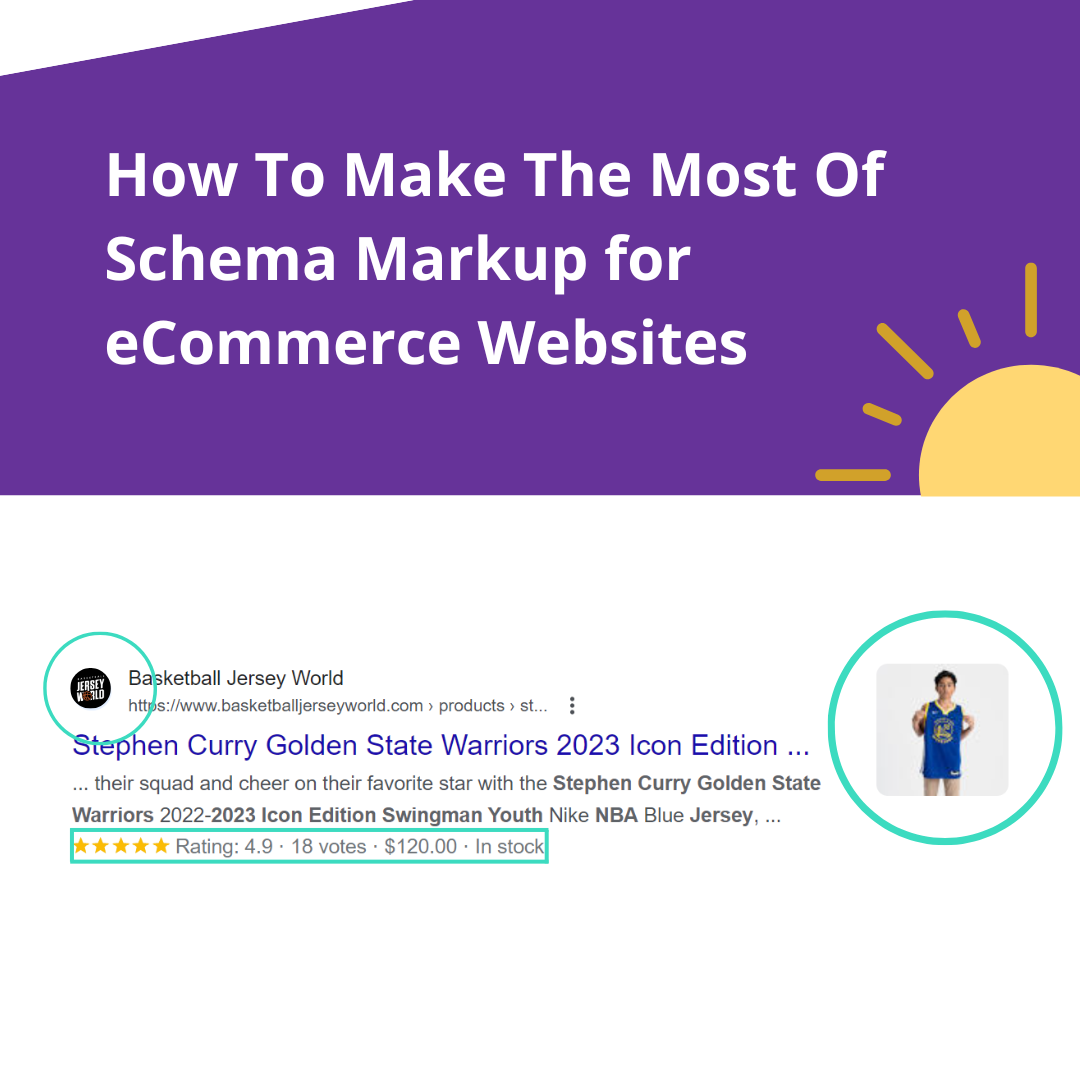
- Implemented Product, Offer and Review schema to enhance listings with rich snippets like ratings, pricing and stock availability, improving visibility and click-through
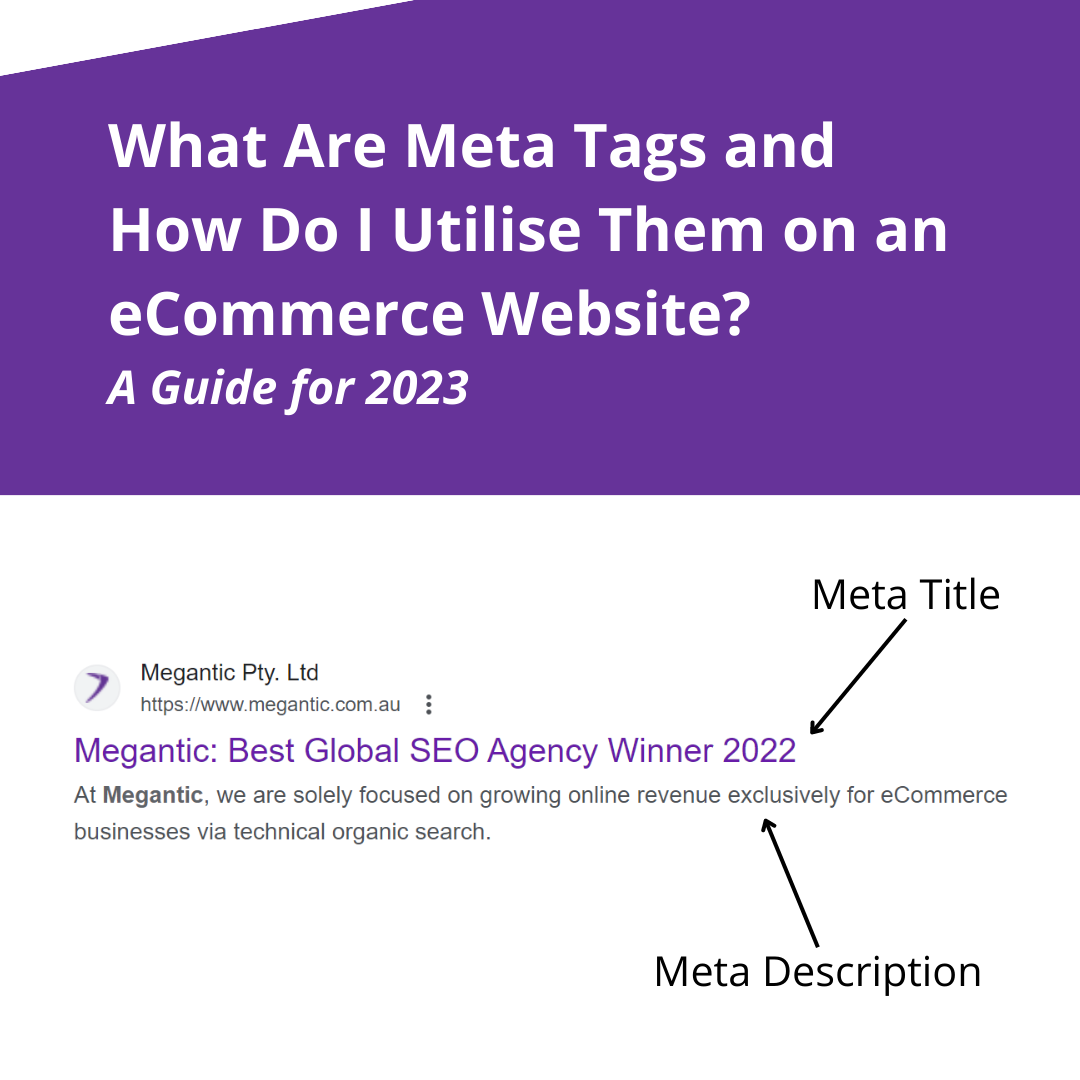
- Optimised meta descriptions to highlight BFCM offers and drive urgency, e.g. “Black Friday Sale: Up to 40% Off – Ends Soon”
- Kept BFCM collections live post-event and linked to them from blogs and other content to prevent orphan pages and preserve SEO value
- Created early-access messaging to drive anticipation and engagement
Results: The fashion brand saw a 79% increase in transactions, a 92% increase in sessions, translating to a massive bump in revenue over this period.
If you’re not sure where to start for your BFCM strategy, walk through the advice in this article and get optimising for the peak period!