What is SXO? And Why Your Site Has To Prove It Works
5 May 2026 Blog Posts
Discovery in 2026 Looks Different:
Search has changed, but not in the way most merchants expect. Search engines and AI systems are no longer asking whether your site exists but whether your site works.
A brief history: Artificial intelligence has moved from the margins of ecommerce into its core operating logic. Early digital commerce relied on rigid rules, static merchandising, and manual optimisation. Today, AI systems continuously interpret intent, learn from behaviour, and adapt experiences in real time; shifting commerce from configuration-driven to intelligence-driven.
Rather than relying on static segments or predefined rules, AI systems personalise experiences continuously, responding to signals such as browsing behaviour, engagement patterns, and purchase history.
What does Search Experience Optimisation (SXO) have to do with Search?
Search Experience Optimisation (SXO) is how modern search engines and AI systems decide which brands deserve visibility, trust, and long-term relevance. In a nutshell, SXO is about credibility, engagement, and long-term rankings.
The eCommerce brands that master SXO will gain compound advantages:
- Better organic visibility
- Lower bounce rates
- Higher lifetime value.
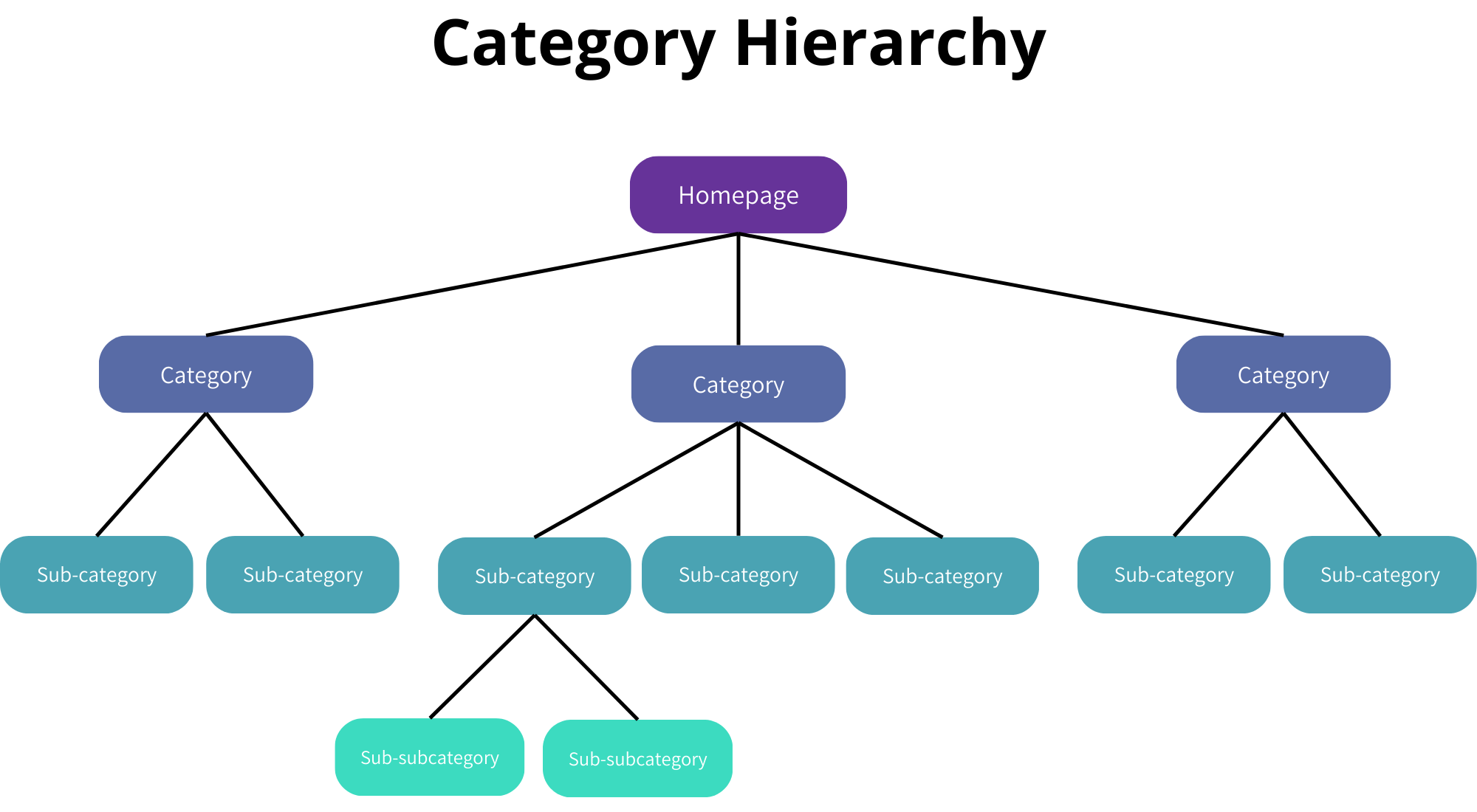
For eCommerce brands, this shift is particularly significant. Product pages, category pages, buying guides, and educational content now operate as signals to AI systems. Every interaction teaches the algorithm something about your brand.
“47% of surveyed Australian retailers state that AI has become core to their business.” KPMG, Intelligent Retail Report
What is the SXO Framework?
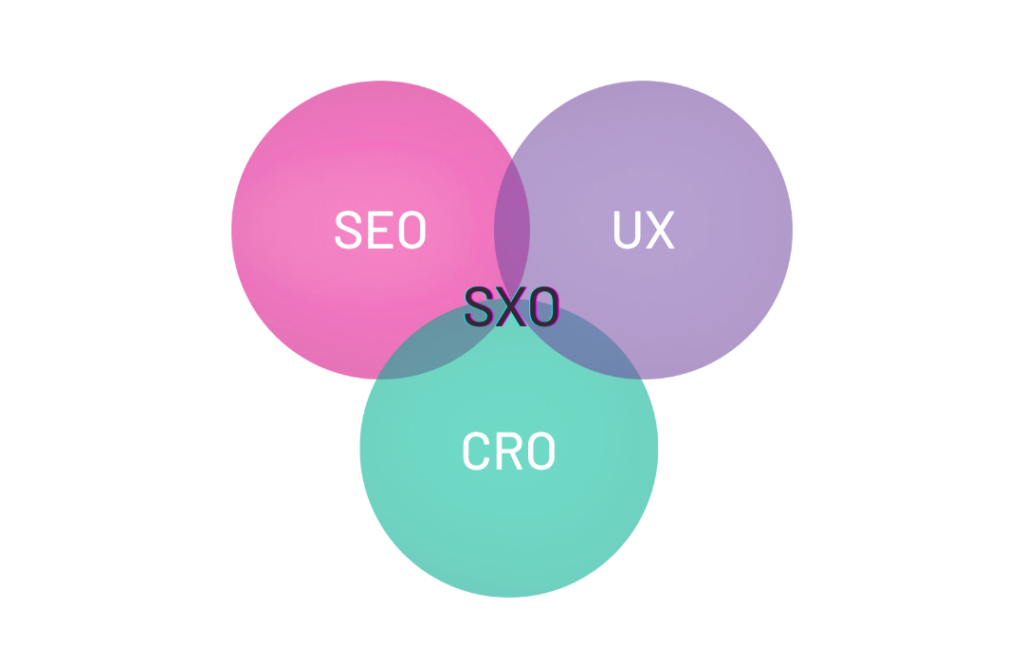
- SEO: Search Engine Optimisation Improving your website’s visibility so the right pages appear when people actively search for your products, services, or information.
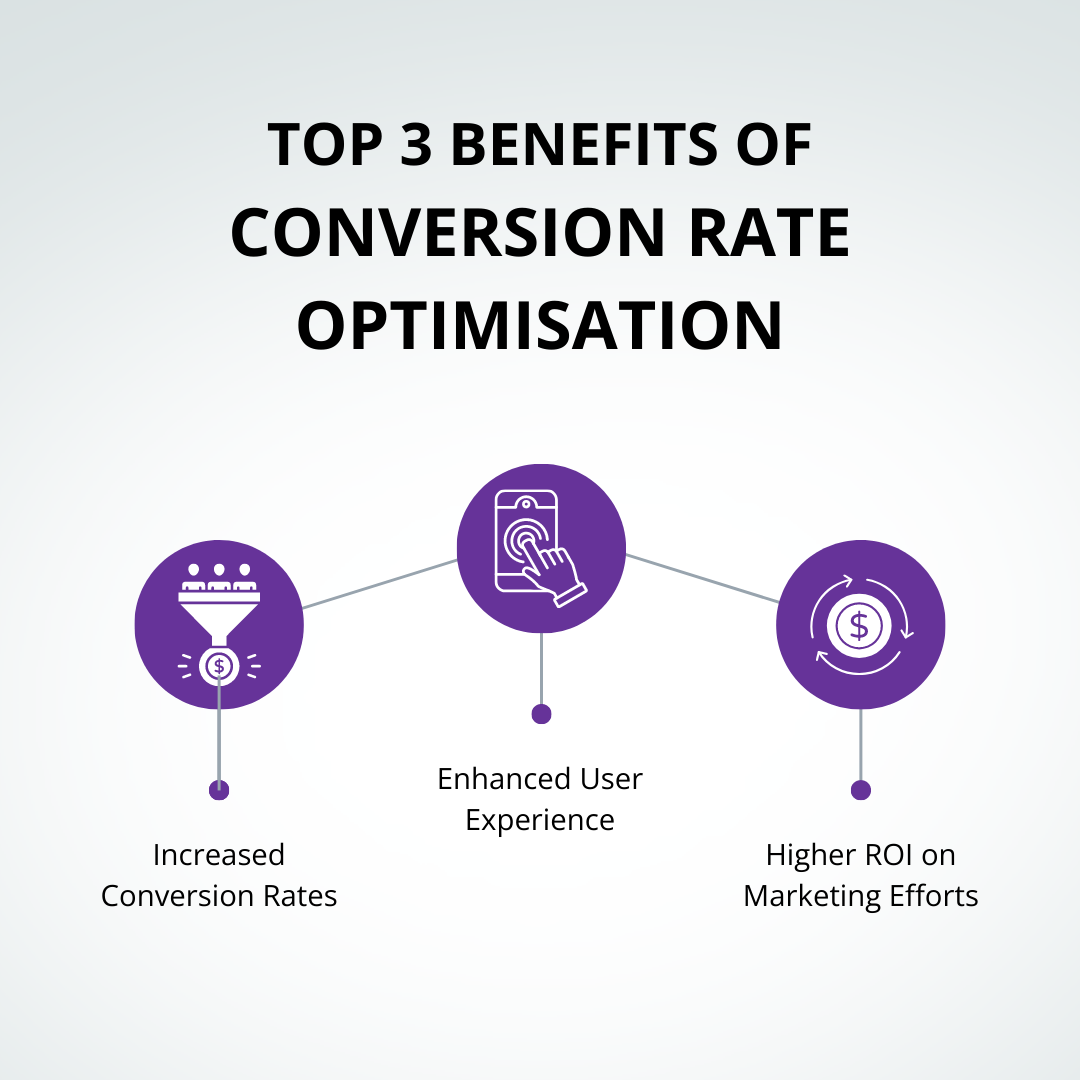
- CRO: Conversion Rate Optimisation Optimising your site so more visitors take meaningful action, whether that’s making a purchase, signing up, or submitting an enquiry.
- UX: User Experience is about how easy and intuitive your website is to use. When users can find what they need quickly and without friction.
SXO = The integration of SEO, UX, and CRO into one cohesive strategy. Strong SXO drives better engagement signals, increasing the likelihood your content is ranked, cited, and recommended.
AI now enables semantic and intent-aware search
Traditional SEO focused on keywords, rankings, and traffic volume. The assumption was simple: if you ranked well, users would click, and success would follow. That assumption no longer holds. AI-driven search environments evaluate outcomes, not promises. They observe how users behave once they arrive and use those signals to decide whether your content should continue to surface.
“Search is becoming more of a ‘choose your own adventure’ experience.”
– Joe Kerlin, Director of SXO Rocket55
SXO is the practice of aligning content, design, and functionality with user intent in a way that can be interpreted by machines. It ensures that when a visitor lands on your site, their behaviour reinforces your authority rather than undermining it. For eCommerce brands, this shift is particularly significant. Product pages, category pages, buying guides, and educational content now operate as signals to AI systems.
For eCommerce brands, this shift is particularly significant. Product pages, category pages, buying guides, and educational content now operate as signals to AI systems. Every interaction teaches the algorithm something about your brand. Every click, scroll, review and mention becomes a signal. Confusion teaches irrelevance. Engagement teaches trust. Where keyword matching once defined discovery, AI now enables semantic and intent-aware search, allowing shoppers to search naturally rather than precisely.
Discovery is no longer constrained by catalogue structure or exact phrasing.
SXO focuses on behavioural signals
As search evolves, traditional vanity metrics like sessions and rankings no longer tell the full story. SXO focuses on behavioural signals that show whether a page met user intent.
Strong engagement signals clarity and trust, while low interaction suggests the page failed to meet expectations. While LLMs don’t use GA4 directly, they learn from patterns that reflect human behaviour. For eCommerce brands, SXO is especially critical on product pages, where imagery, specifications, FAQs, and reviews build confidence. Poor behaviour signals include high bounce, poor UX and inconsistent entity understanding.
AI is not just looking at your online store
AI builds brand understanding across your website copy, Google Business Profile, reviews and Q&A, marketplaces or stockists, PR mentions, and backlinks. Inconsistency across these touchpoints confuses AI.
SXO teaches AI about your brand and learns it by observing real user behaviour and outcomes across every surface where your brand appears. If a product page has a high bounce rate, AI assumes it didn’t meet expectations, no matter how well it’s optimised, and over time, that page is shown less. If you don’t intentionally teach AI who you are, it will infer your brand from incomplete signals. Once that judgment is made, every future answer, recommendation, and summary reinforces it.
The SXO Signal Stack Summarised:
| Tool / Platform | What It Measures | What This Says About Your Site |
| Google Analytics (GA4) | Engagement time, scroll depth, product views, and navigation behaviour across sessions | Whether visitors find your pages useful enough to stay engaged and explore further |
| Semrush & Ahrefs | Ranking stability, visibility shifts, SERP feature inclusion, and volatility over time | How consistently search engines view your site as relevant and competitive for key topics |
| Microsoft Clarity | Click behaviour, scroll behaviour, hesitation points, and interaction paths | How clearly users understand and navigate your site |
| Shopify Analytics | Product detail page interactions, variant selection, image engagement, and add-to-cart behaviour | Whether your product pages build trust and confidence to support purchasing decisions |
“People have always needed clarity to convert. Now machines need it too. In an AI-shaped search landscape, there is no emotion, only the facts, context, and signals your brand publishes. Unless you can win on price alone, profitably, brand is no longer a nice-to-have”
– Kate Hunter, Head of Growth & Operations at Megantic
Why SXO matters:
- Brands that master SXO gain compounding wins: stronger visibility, lower bounce rates, and higher lifetime value.
- The new benchmark is not rankings but whether machines understand and recommend your brand.
- If you do not define your brand for AI, it will define you from incomplete signals.