Why AI Picks Some Pages and Ignores Others
7 May 2026 AI
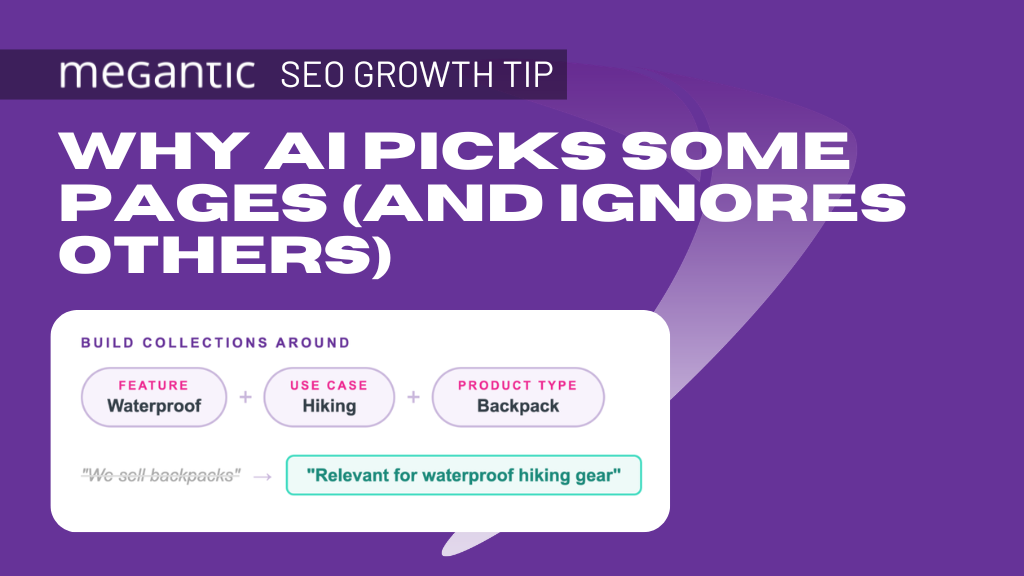
AI doesn’t rank like Google. It picks the clearest answer. Right now, most ecommerce stores are losing recommendations not because their products are bad, but because AI can’t confidently identify what they sell.
How AI engines decide which products to show
The hidden architecture of AI Search LLMs, broadly speaking, is an AI system trained on vast amounts of text so it can understand and generate human-like language. By learning patterns in words and context, they can answer questions, summarise information, and generate responses in conversations.
To do this, most modern AI systems operate in two main stages: The Retrieval Layer & The Interpretation Layer
Models such as GPT-5 follow this general approach, combining information retrieval with deep language understanding to produce useful and context-aware answers.
Retrieval Layer (Can it find you?)
The engine scans its index or connected search infrastructure for content that closely matches the user’s intent. Pages that clearly align with semantic queries are prioritised. For Shopify brands that want to stay competitive, this means mapping category pages, collection filters and PDPs directly to real shopper language, not just internal merchandising terms.
The Interpretation Layer (Can it understand you?)
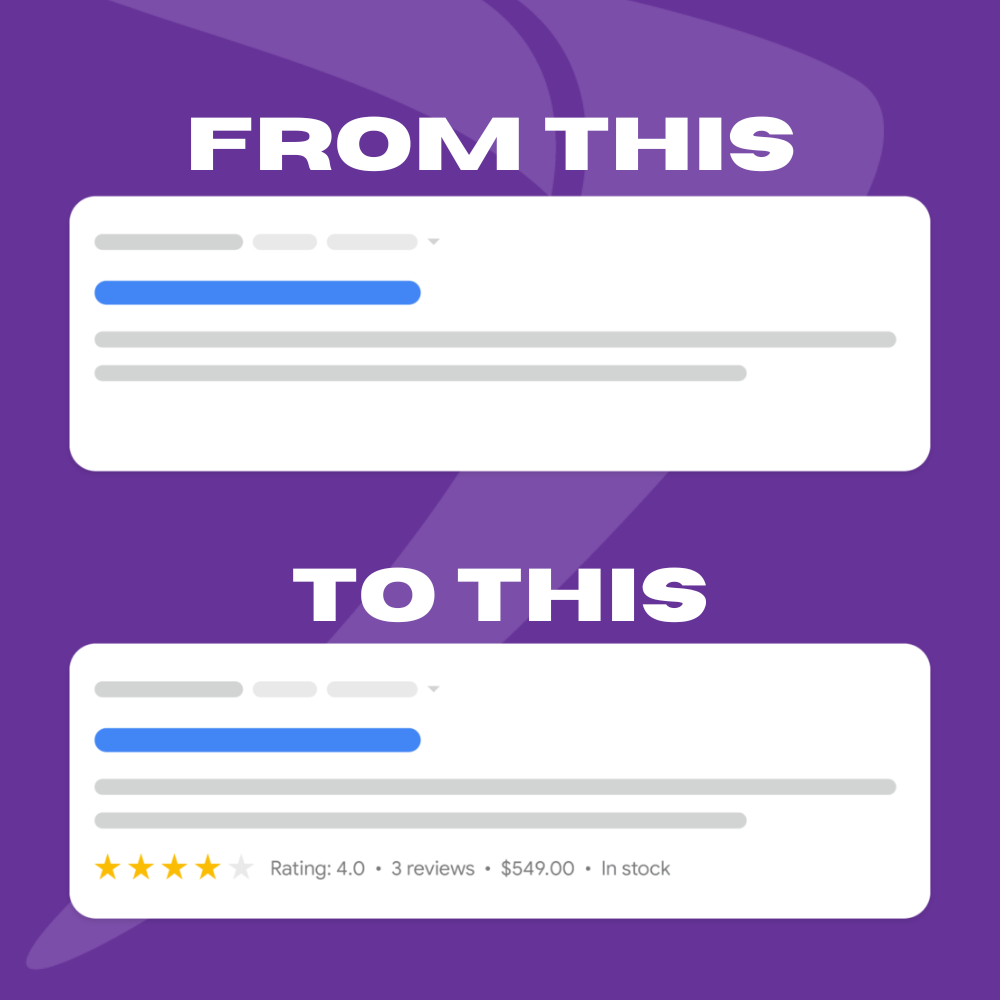
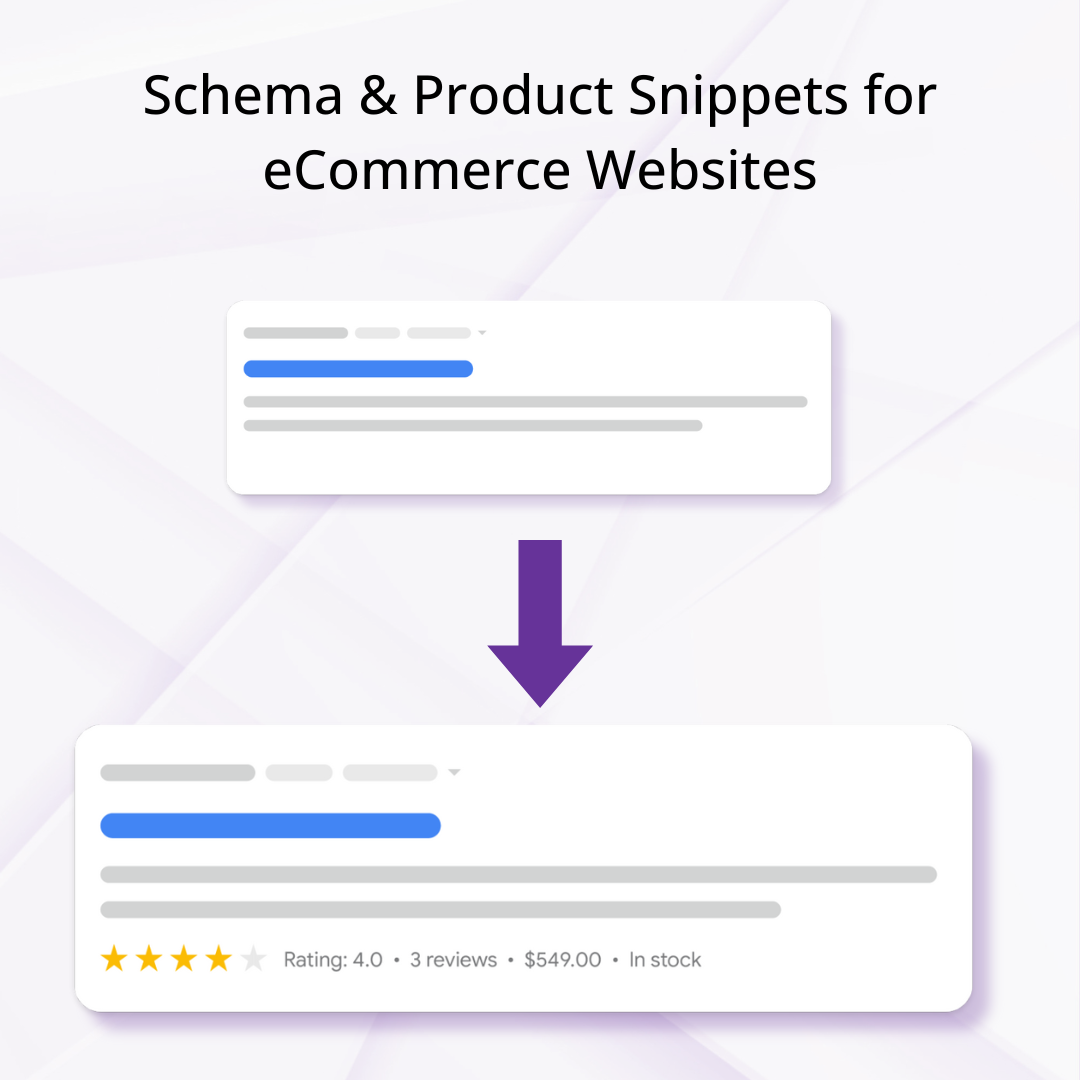
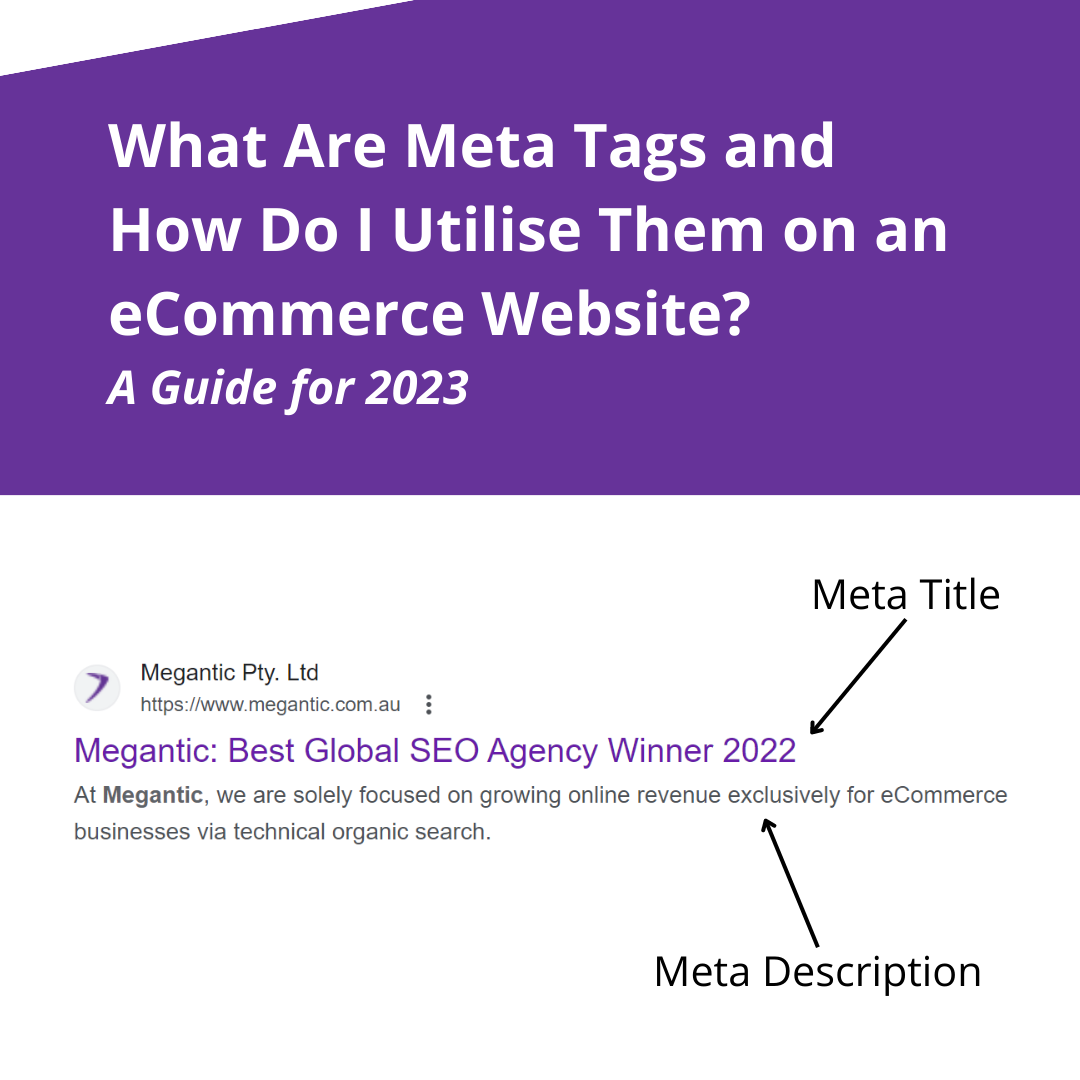
LLMs interpret structured data, product attributes, reviews, pricing, availability, and broader brand context to decide what’s trustworthy and recommendable. Clean, complete schema markup and consistent on-page metadata make it easier for AI systems to extract reliable facts.
On product pages, prioritise Product schema with Offer (price, currency, availability) plus AggregateRating and Review where available. Pair this with consistent product attributes (variant options, GTIN/MPN/SKU, brand, shipping/returns rules) and descriptive copy so key details are unambiguous and machine-readable.
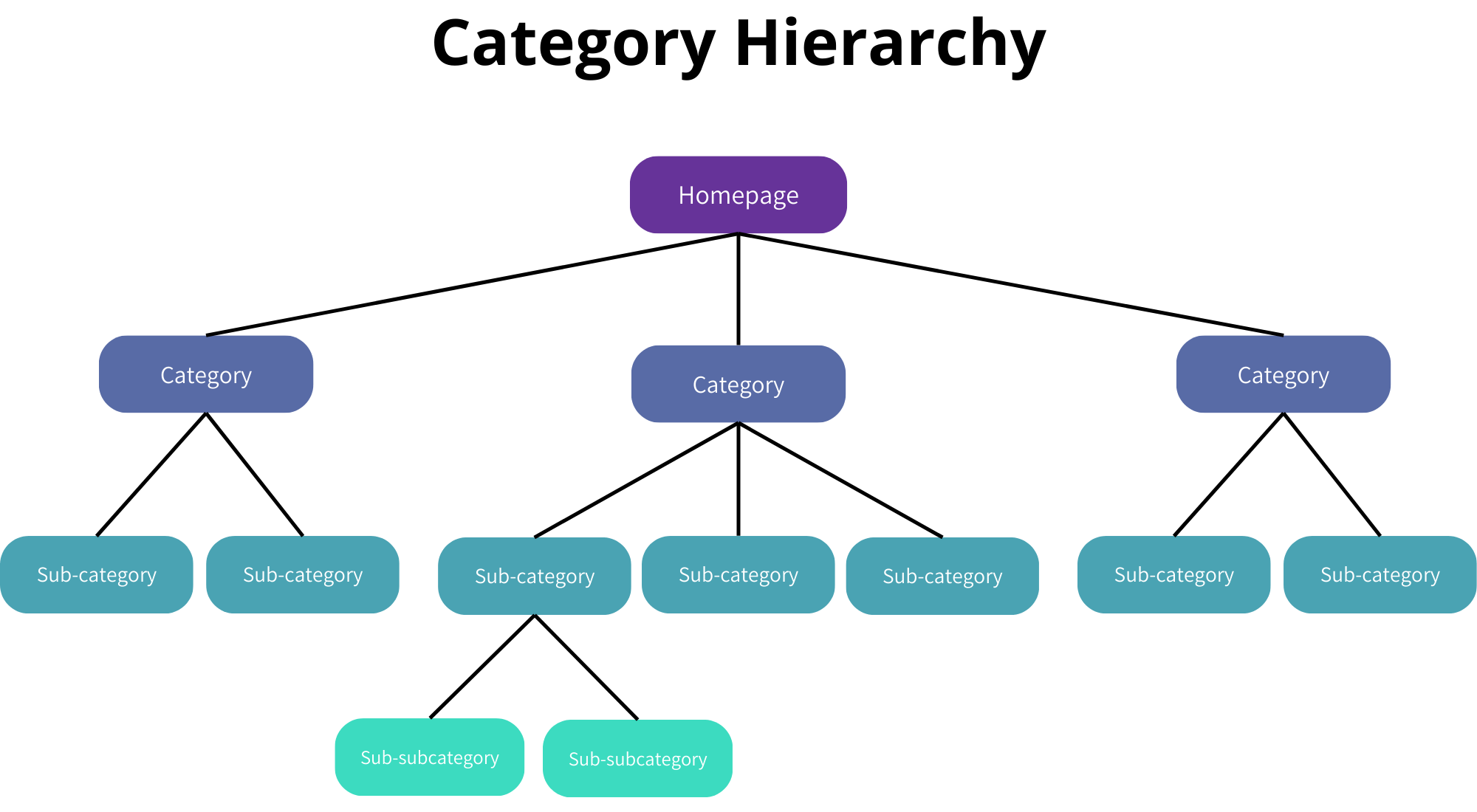
Takeaway: When you structure collections around Feature + Use Case + Product Type, you build what’s called an entity stack. It’s the difference between AI ignoring your store and AI recommending it.

One way to think of Entities is as “things”
For instance, an Entity is a clearly identifiable concept, such as:
- A person (e.g. Albert Einstein)
- A product (e.g. iPhone 17)
- A location (e.g. Melbourne)
- A Platform (e.g. Shopify)
How to reinforce signals?
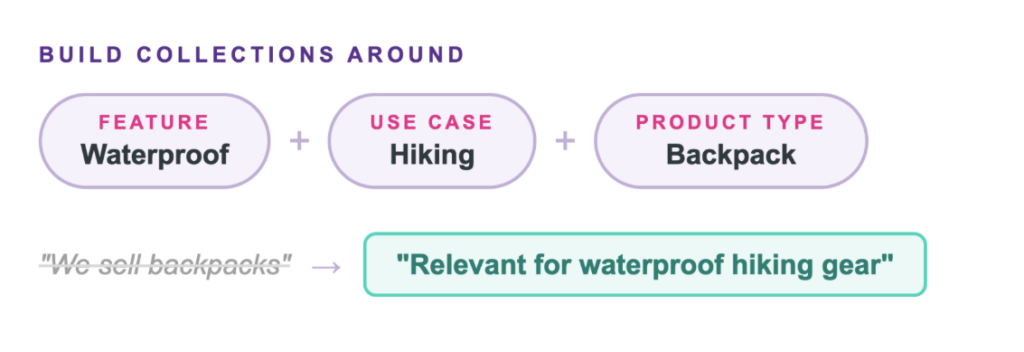
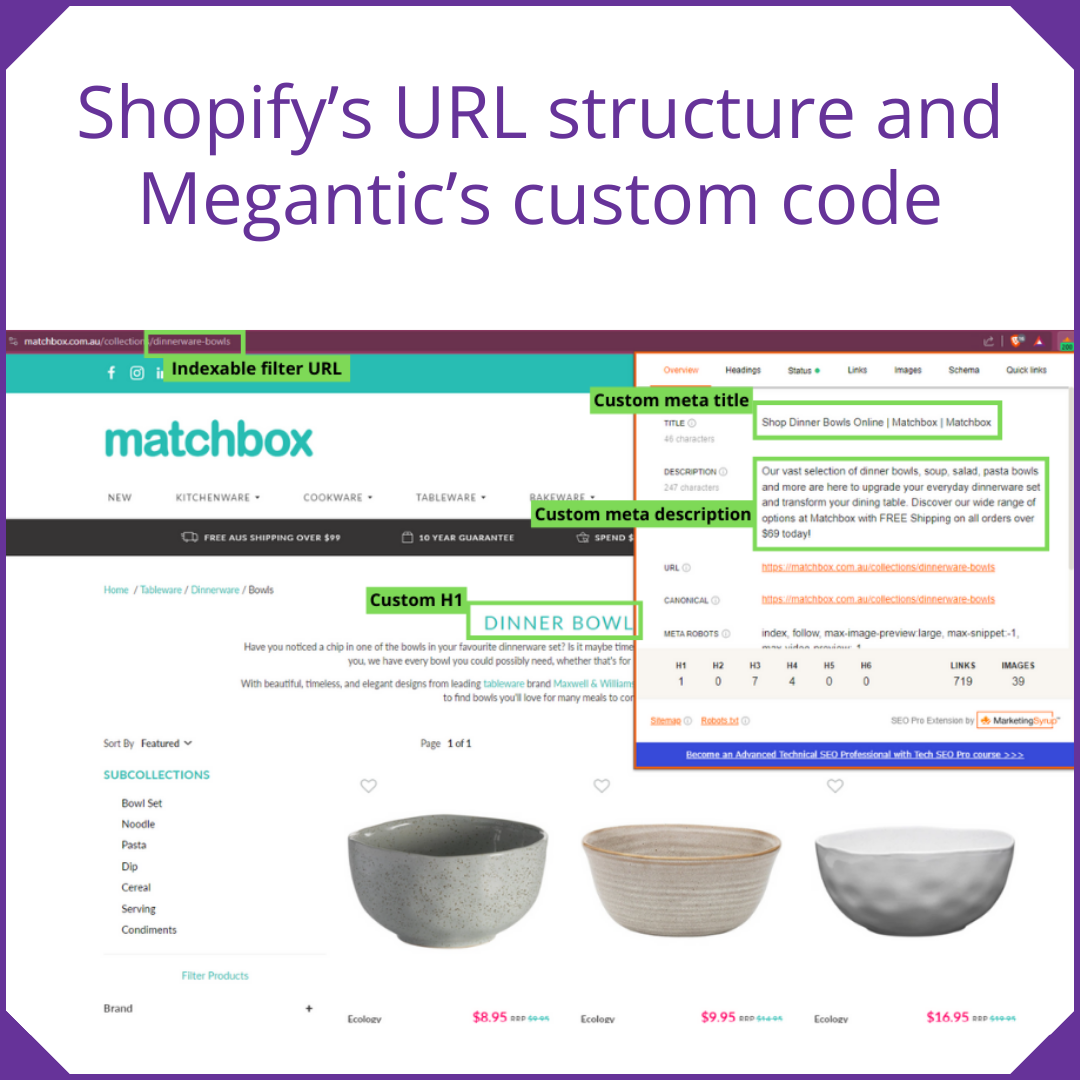
If we stick with our backpack example, we can boost AI retrieval by creating new collections and focusing on the following:
- The URL reflects that phrase: /collections/waterproof-hiking-backpacks
- H1 mirrors it naturally, Waterproof Hiking Backpacks
- The Collection Copy defines waterproof standards
- Product Tags and attributes, e.g. capacity, material and use case
- Internal Links connect to related hiking gear
- Schema clarifies Product, Offer and AggregateRating
Ambiguity lowers confidence. Clarity increases citation.
AI doesn’t rank like Google. It chooses the clearest answer.
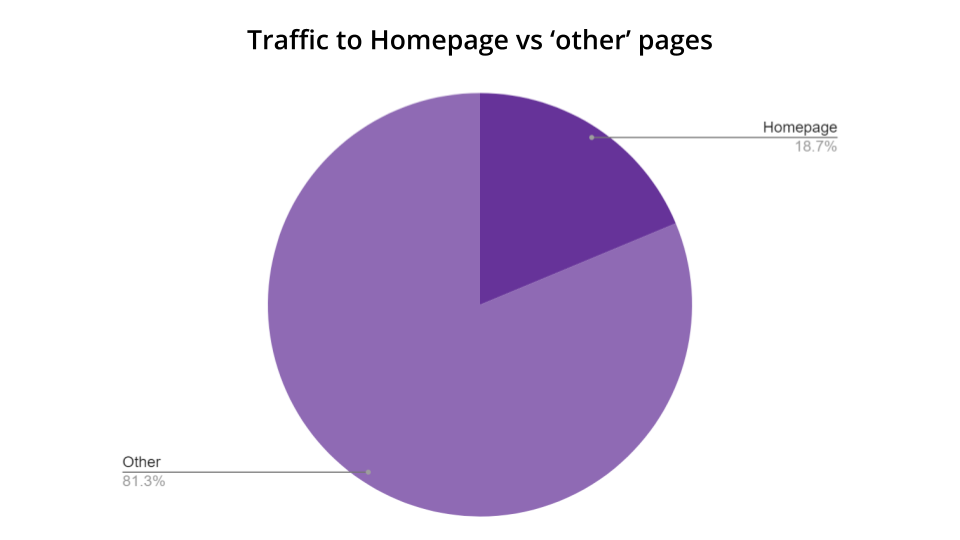
Take a look at your key pages and start with the highest-traffic collection pages; that’s where the wins are! Understanding how AI interprets your products is just one part of the equation. Explore our 2026 Search Landscape: How AEO Is Redefining Shopping for eCommerce Brands, developed with Shopify, for a deeper look at how AI is reshaping the eCommerce search landscape.