Best practice (SEO and UX) for PDP - Product Page Tips
20 October 2025 Blog Posts
A great product page can make all the difference between someone browsing and someone buying. With search evolving thanks to AI and large language models (LLMs), the way you design and write your product detail pages matters more than ever. Here’s a quick rundown of what makes a high-performing product page and how to make yours stand out.
Content & Product Information
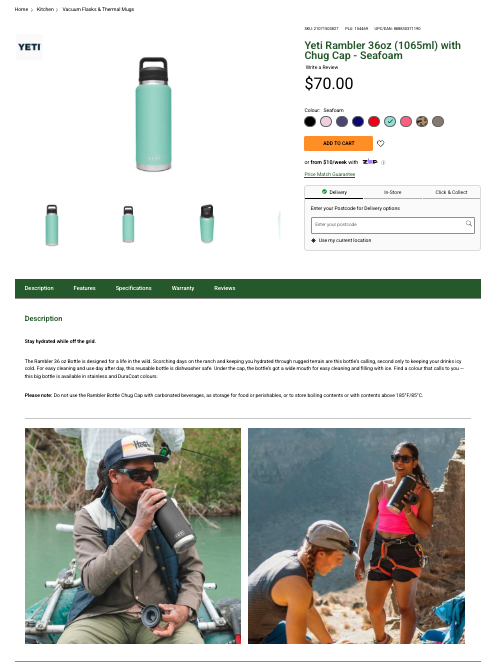
- High-Quality Visuals: Use high-resolution images and videos that allow users to zoom in and see product details, textures, and features up close.
- Compelling Descriptions: Write clear, concise, and benefit-driven product descriptions, using synonyms and long-tail descriptive phrases. Think about anything that a potential customer could want to know about the product and mention it.
- Product Variants: Clearly display choices for size, colour, or model, using dropdowns or swatches.
- Complete Information: Include details on pricing, shipping costs, taxes, availability, delivery estimates, and return policies to build confidence.
- FAQs: Add a frequently asked questions section to address common customer doubts – also helps SEO.
See example from Megantic Client: Tentworld
User Experience & Design
- Mobile-First Design: Ensure your page is responsive and optimised for mobile devices, with large, thumb-friendly buttons and fast loading times.
- Prominent Calls to Action (CTAs): Place “Add to Cart” or “Buy Now” buttons strategically so they are always visible, even on mobile.
- Clear USPs: Ensure unique selling propositions are clear and prominent – TPE have this with the 4 points at the top. Made in Austria, Female founder etc.
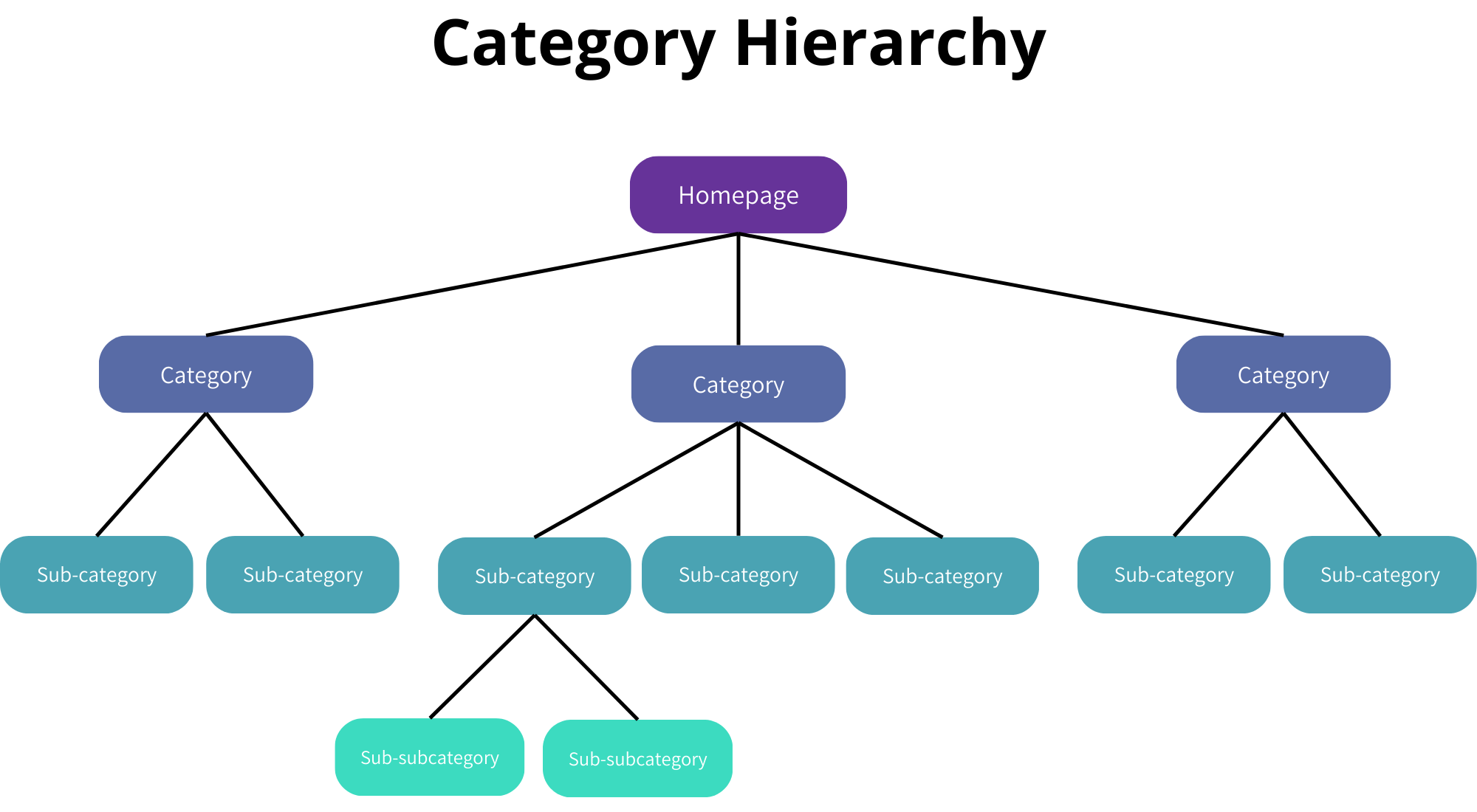
- Clear Navigation: Use breadcrumbs to help users easily navigate back to previous pages and understand their location within the site. Also helps SEO by creating hierarchy.
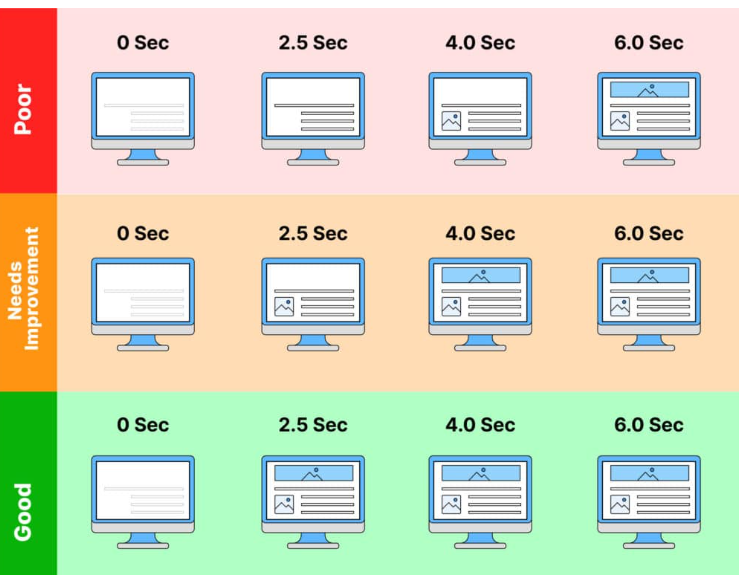
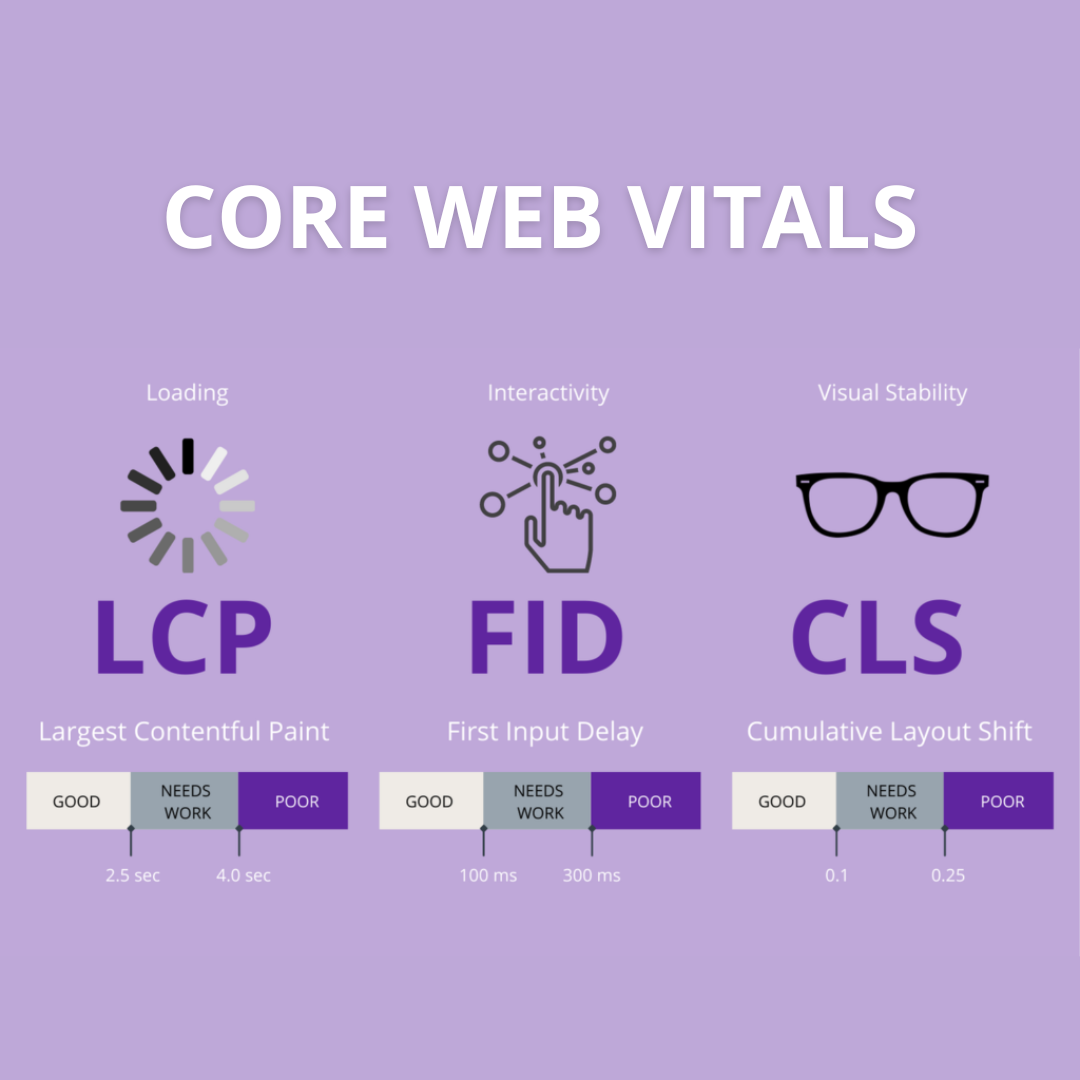
- Fast Loading: Optimise images (using adaptive formats like WEBP) and implement lazy loading for images below the fold to improve page speed.
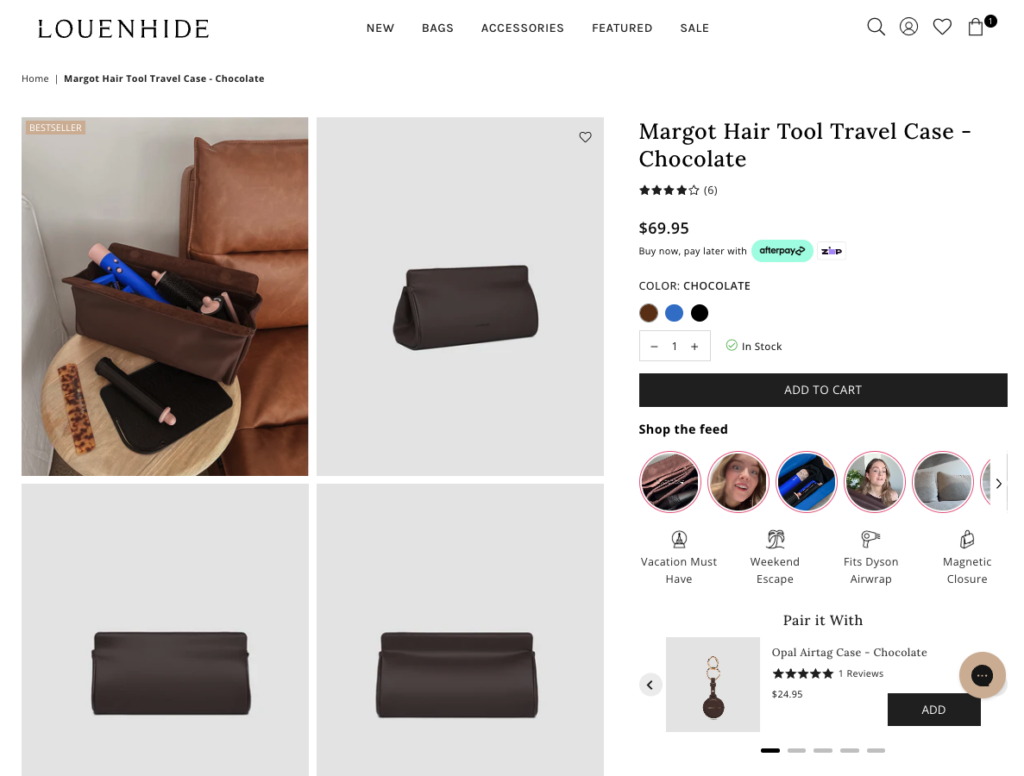
See example from Megantic client: Louenhide
Trust & Conversion
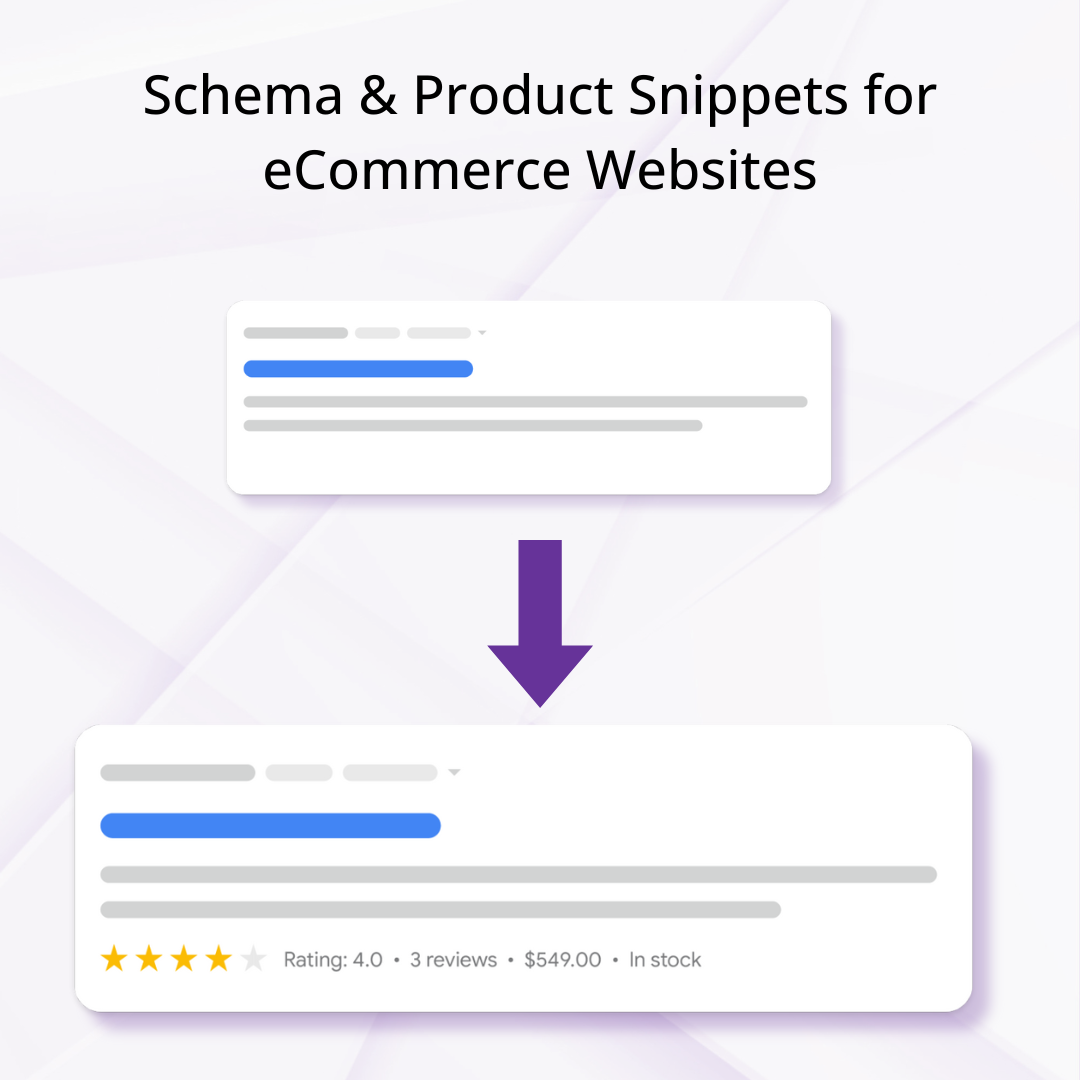
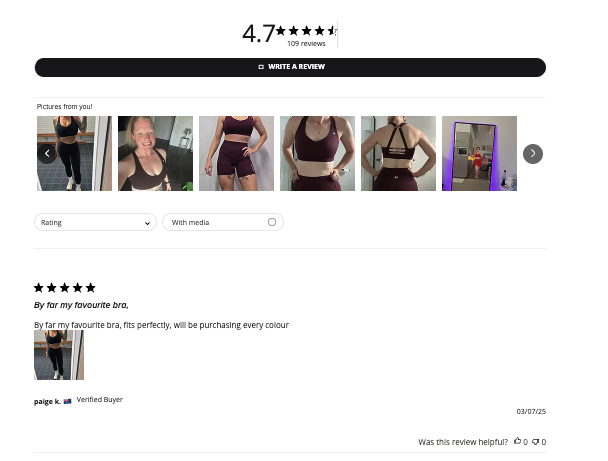
- Social Proof: Display customer reviews, star ratings, and photos/videos to build trust and encourage purchases.
- Trust Badges: Include badges for things like secure payments or guaranteed quality to establish credibility.
- Upselling & Cross-selling: Suggest complementary products, upgrades, or bundles to increase the average order value.
- Wishlists & Notifications: Allow users to add items to a wishlist or sign up for notifications when a product is on sale.
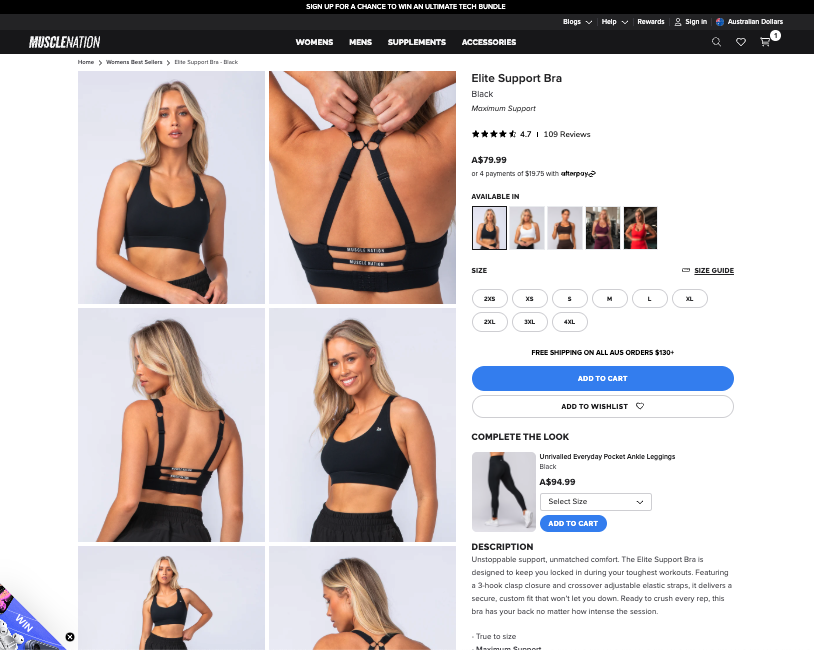
See example from Megantic client: MuscleNation
See example from Megantic client: MuscleNation
By focusing on these SEO and UX best practices, you can create product detail pages that not only attract more visitors but also convert them into loyal customers. Remember, a well-optimised PDP is an investment that pays off in higher engagement, better search rankings, and ultimately, increased sales.
If you’ve got any questions about how to implement some of these strategies, our team is always happy to help. You can also learn more about our AI SEO Services here.