eCommerce Express Digest - January 2026
11 January 2026 Blog Posts
Well, a Happy New Year! And welcome back to your first Digital Marketing and SEO update of the new year. Where I round up big news in small pieces to keep you across the latest in tech, digital marketing and retail, with an eye on what matters most for Australian eCommerce brands heading into 2026.
Kicking off the new year with a practical planning resource, Australia Post has released its eCommerce Sale Event Calendar, highlighting key online sale dates from January to June 2026. The calendar is designed to help Australian eCommerce businesses better plan promotions, marketing activity and delivery strategies around peak demand periods.
BFCM outperforms Christmas Sales according to Megantic Client data
For many years, Australian retailers have viewed Christmas and Boxing Day as the most important moments in the retail calendar. However, consumer behaviour has shifted, and recent performance data tells a different story. Black Friday and Cyber Monday (BFCM) have become the primary drivers of end-of-year growth, making November the most commercially important month for online retailers.
Megantic’s latest BFCM analysis reveals that brands investing early in BFCM visibility significantly outperform those that wait until December, not just during sales events, but across the entire quarter. The BFCM hype is real. This period is a sharp reminder of what really drives performance: aligning your SEO and onsite experience with real customer intent and having a specific BFCM strategy in place before the November rush hits.
Retailers that continue to focus their strategy too late in the year risk missing the most valuable window for demand capture, discovery, and revenue acceleration. Megantic clients with a BFCM strategy saw a 23% revenue lift (YoY) compared to Megantic clients who didn’t run a BFCM strategy.
During the BFCM window, retailers with a defined BFCM SEO strategy recorded:
- 97% month-on-month growth in organic revenue
- 23% year-on-year growth
- Higher sessions, stronger conversion rates, and significantly more revenue than brands without a strategy
In contrast, the Christmas period showed clear declines when compared to BFCM:
- Clicks fell by 15%
- Sessions dropped by 12%
- Conversion rates fell by 23%
By the time Christmas and Boxing Day arrive, most purchasing decisions have already been made. Boxing Day still plays a role, particularly for clearance and inventory management. However, it is no longer the primary growth lever for online retailers.
December 2025 Google Core Update: What eCom Marketing Teams Need to Know
Before we wrapped the year 2025, Google quietly rolled out its December Core Update. Dropping a core update right in the middle of the December crunch is certainly one way to keep the industry on its toes. Announced on December 11 via Google’s Search Status Dashboard, this marks the third major core update of 2025 and follows the March and June core releases earlier in the year.
Google has begun rolling out its December 2025 Core Update. As publicly stated on LinkedIn and other social media platforms, the update is “designed to better surface relevant, satisfying content for searchers from all styles of sites” – Google Search Central, 2025.
The rollout may take up to three weeks to complete and is expected to influence rankings globally for brands in many industries, and we predict some changes heading for eCommerce stores. For additional information check out the Megantic blog, December 2025 Google Core Update: What eCom Marketing Teams Need to Know.
Google Confirms Rollout of Smaller Core Updates
Google’s Search documentation now explicitly states that the company conducts smaller, unannounced core updates throughout the year. While not significant enough for formal public announcements, these quieter updates can still affect a website’s search rankings, either positively or negatively. The impact depends on various factors, including how well the site’s content aligns with Google’s quality expectations.
The latest Core Update is live, and while the SEO landscape is constantly shifting, here are five things we’re advising our clients and other eCommerce brands to focus on right now.
- Focus on people-first content: Google continues to reward content that is genuinely helpful, trustworthy and meets user intent. This is a good starting point for site owners; consider how you can improve your content in meaningful ways. For example, it could be that rewriting or restructuring your content makes it easier for your audience to read and navigate the page.
- Analyse performance with context before reacting: This update landed during a highly seasonal period, so don’t panic over short-term volatility. Use Search Console and GA4 together to separate normal seasonal fluctuations (especially this time of year) from algorithmic impacts and analyse with context before you make any rash decisions.
- Showcase expertise (E-A-T-T) feature expert-written content: Provide in-depth product insights and build trust through authoritative sources. Google has increased scrutiny on eCommerce category pages; having thin, duplicate, or AI-generated content is now more likely to be penalised, while well-structured, informative, and user-focused pages can win you more search traffic. Therefore, your goal should be to create well-structured, informative, and user-focused category pages.
- Pay attention to the small movements, not just the big updates: Google has been clear that it now rolls out smaller, unannounced core updates all the time. This means improvements you make today don’t need to wait for the next “big” update to show results. Focus on tracking incremental changes to rankings and impressions at the URL level. Our observations show that SEO improvements are increasingly cumulative. For guidance on how long this process takes, refer to the Google documentation on Core Updates.
- Avoid doing “quick fix” changes: Resist the urge to remove sections, strip content, or make sweeping changes based on hearsay. If a change doesn’t improve the user experience, it’s unlikely to help SEO in the long run. Instead, focus on making changes that make sense for your users, and as we guide all our clients, sustainable improvements beat quick fixes every time.
Google Introduces “Read More” Links Directly in SERPs
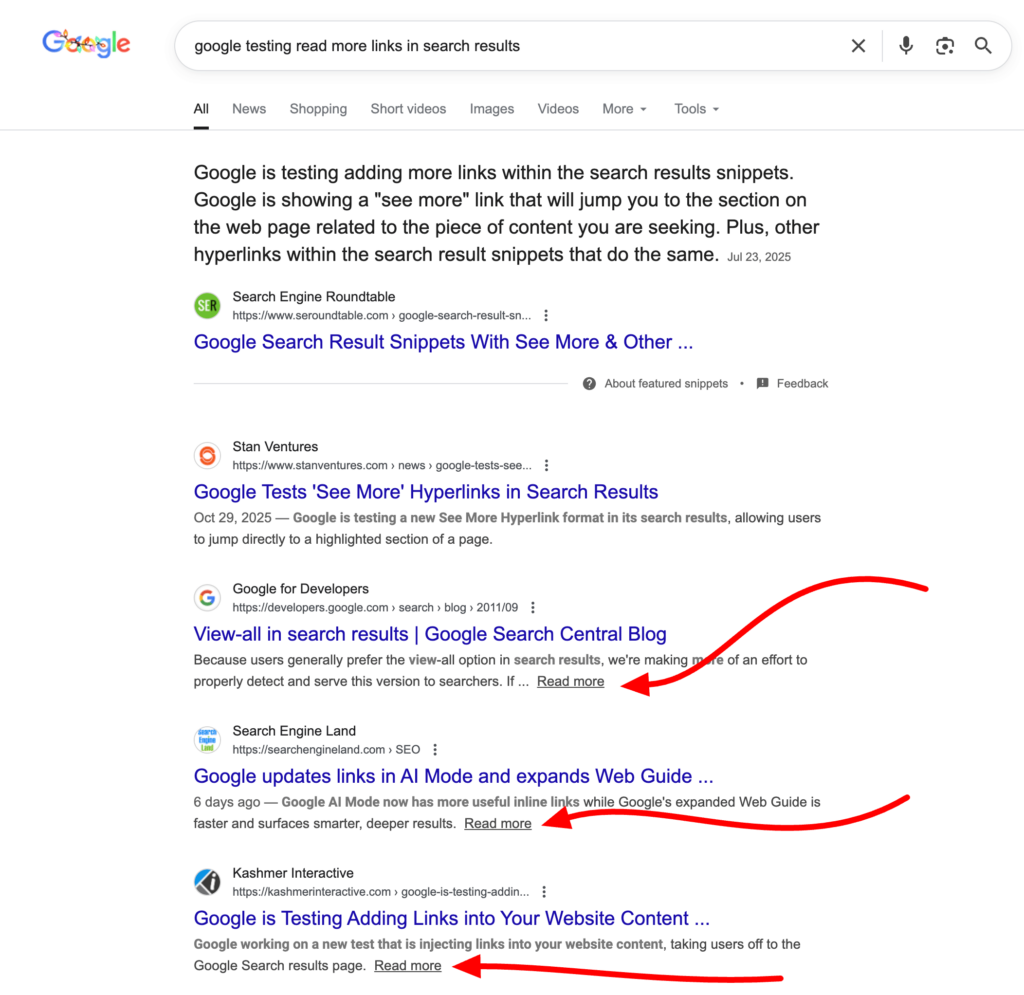
Google has begun testing “Read more” links within search result snippets, allowing users to expand content without having to click through to a website immediately. This feature appears to be designed to surface more on-page context directly in the SERP, especially for longer or more complex answers.
For eCommerce brands, this reinforces the importance of creating structured, high-quality content that clearly communicates value from the outset. If Google is choosing which parts of your content to reveal upfront, clarity, hierarchy, and schema markup matter more than ever.
Search Console Adds Weekly and Monthly Performance Views
Google has officially rolled out weekly and monthly views in Google Search Console, giving site owners more flexibility in how they analyse performance trends. Previously, reporting leaned heavily on daily data, which could make longer-term patterns harder to spot.
This update makes it easier to identify seasonality, measure campaign impact, and track algorithm updates without over-indexing on daily volatility. For SEO and eCommerce teams, it’s a practical step forward in aligning reporting with how businesses actually plan and evaluate growth.
Search Console Experiments With Social Performance Insights
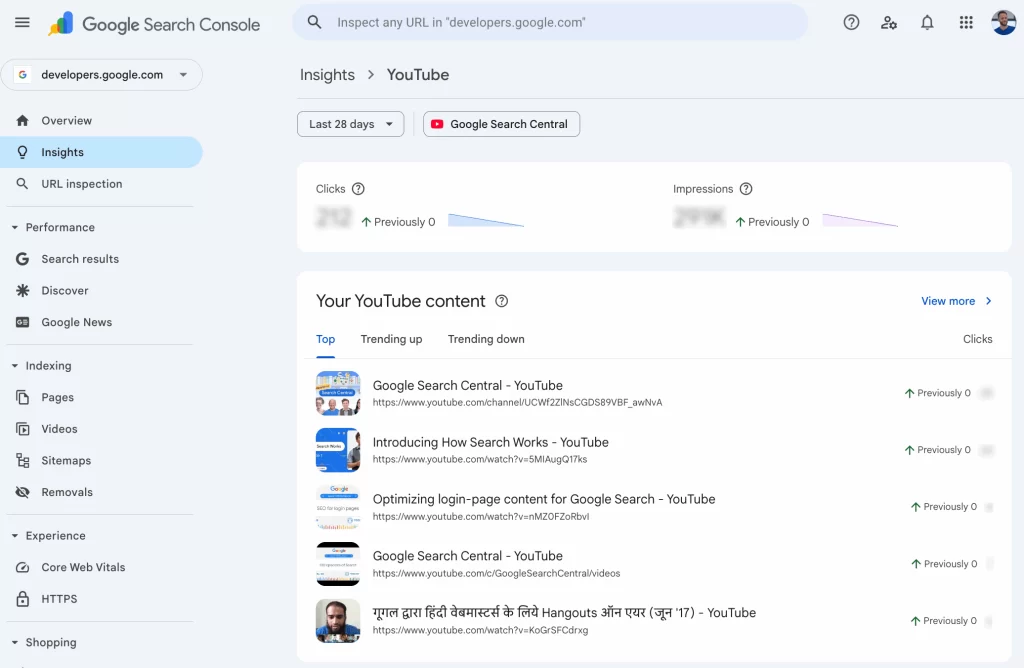
Google is experimenting with integrating social channel insights into Search Console, bringing visibility into how content performs across platforms like YouTube, TikTok, and other social surfaces alongside search data.
This move reflects a broader reality: discovery no longer happens in one channel. For brands, the experiment hints at a future where search, social, and content performance are evaluated together, not in silos. While still early, it’s a strong signal that Google recognises multi-platform visibility as part of modern search behaviour.
Here is a screenshot of the Social Performance report with social channel data; the example shows YouTube channel data:
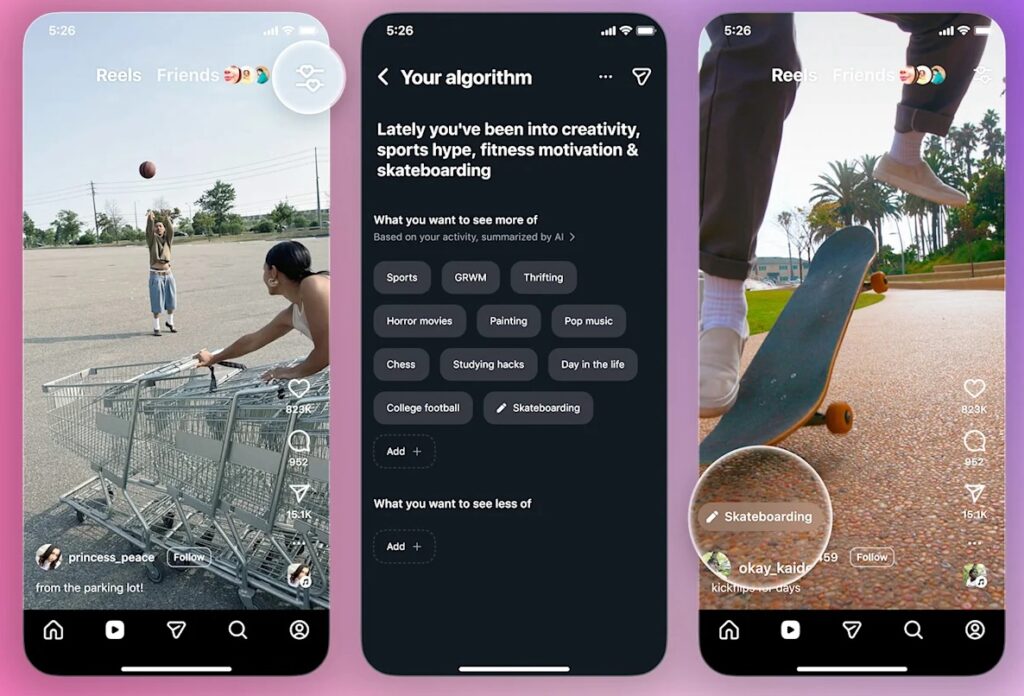
Instagram Explains How Its Algorithm Really Works (US Only)
Instagram has published new guidance explaining how its algorithm ranks and distributes content, offering creators more transparency into what drives reach, engagement, and visibility. The update currently applies only to the United States.
While not directly search-related, this reinforces a key trend for eCommerce brands: platforms are becoming more explicit about how machines interpret content. Understanding algorithmic signals from engagement patterns to content structure is increasingly essential across both social and search ecosystems.
“We’re always trying to show people the best possible reels for them. I think we do a pretty good job today, but we don’t always get it right, and we know that people’s interests change. What we really want to do is give people control over the experience that they have on Instagram.” – Tessa Lyons, Instagram’s vice president of product, told Fast Company
Core updates often bring short-term ranking volatility. If you’ve noticed meaningful changes since December 11, there’s a strong chance they’re linked to Google’s latest core update or the smaller, ongoing adjustments happening behind the scenes. Our team is well-placed to help you navigate this update and stay ahead of the next one. If you have questions about what this means for your business, or really any of the articles mentioned in this month’s digest, feel free to reach out to our friendly team.